Coral Health Intelligence

← Community

Coral Community

Tips & Guides

Community reef tips and guides.

guide

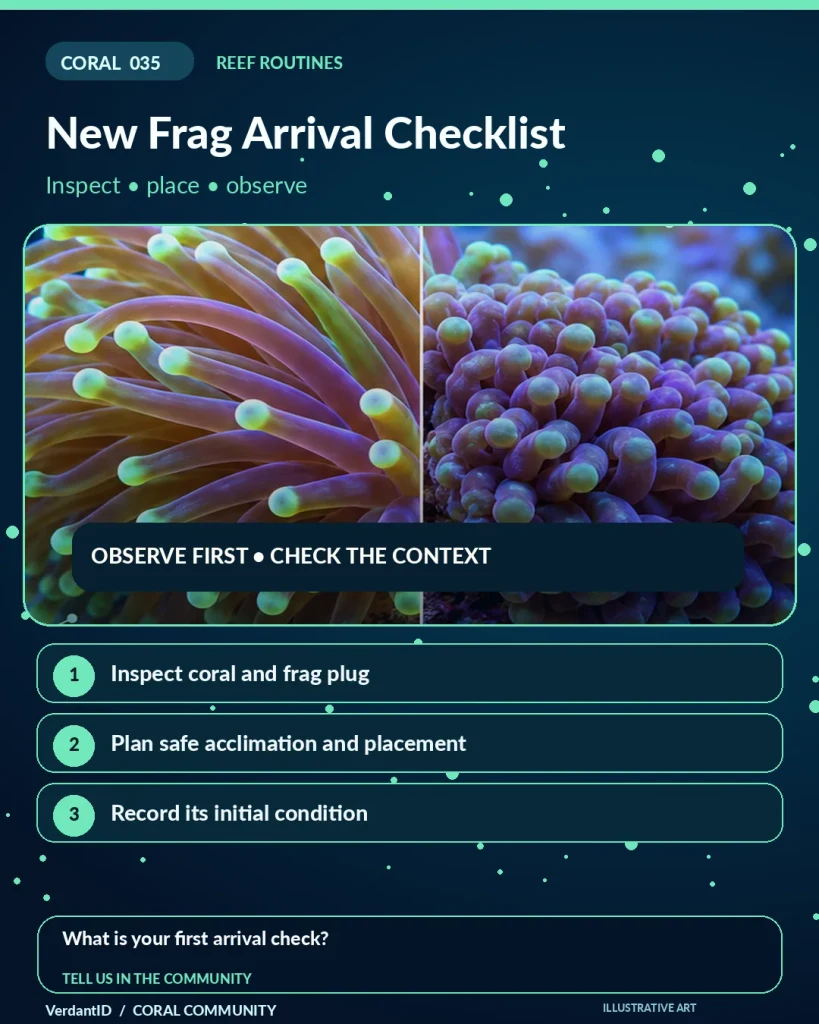
New Coral Arrival: Prepare the Record Before the Box

Arrival care begins before opening the delivery. A prepared observation space, supplier instructions and a place to record the coral's history reduce rushed decisions. ## Before arrival Save the order details and best-supported identification. Ask the supplier about shipping, p…
  • Coral Care
  • Reef Tank

0 responses · 0 reactions

guide

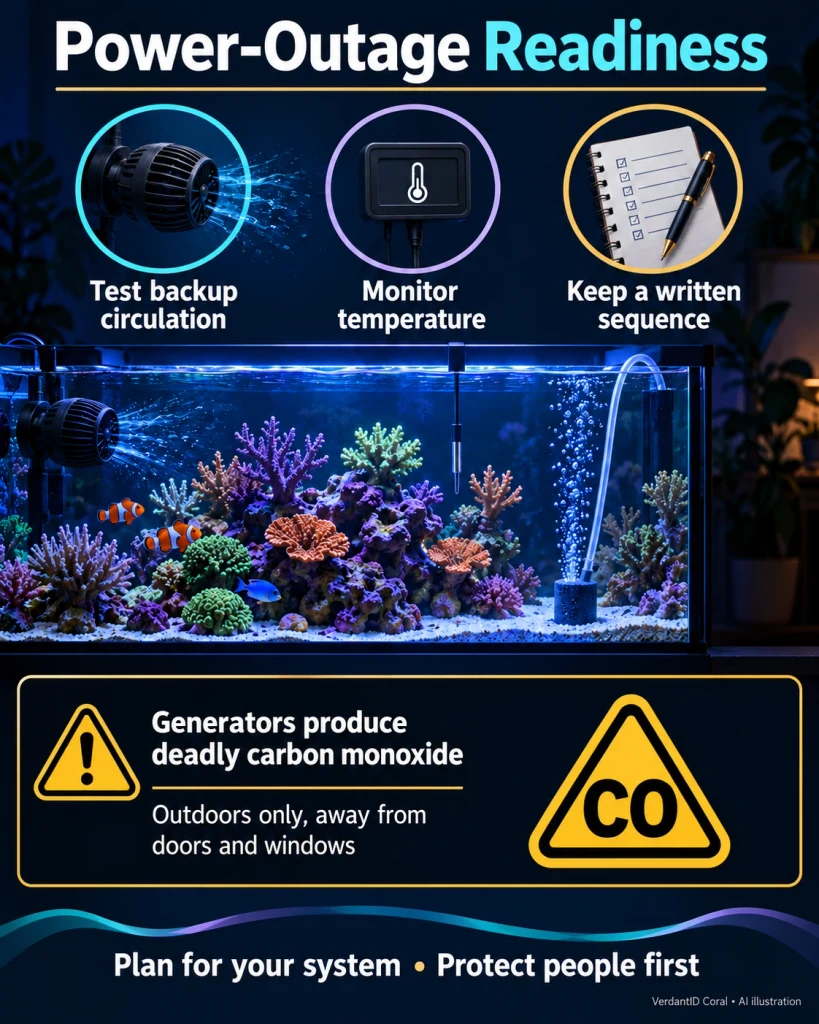
Power-Outage Readiness: Plan Before the Lights Go Out

An outage plan is easier to use when the equipment has already been tested. Decide how to support essential circulation, gas exchange and temperature for your system before an emergency. ## Inventory the essentials List equipment, actual power draw, battery or backup compatibil…

  • Coral Care

0 responses · 0 reactions

guide

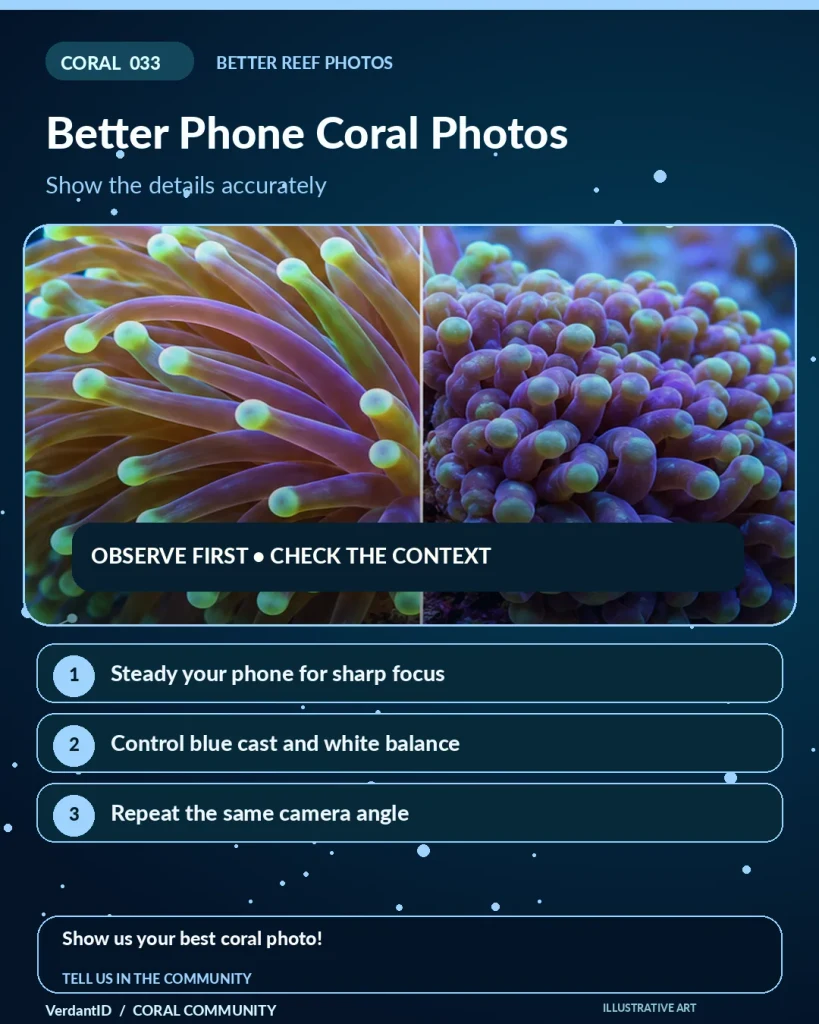
Better Coral Phone Photos: Keep Detail and Context

A beautiful reef picture and a useful observation picture have overlapping but different goals. For an identification or concern, accurate detail and a repeatable view matter more than dramatic saturation. ## Take a useful pair Save one image of the whole colony and its placeme…

  • Coral Care

0 responses · 0 reactions

guide

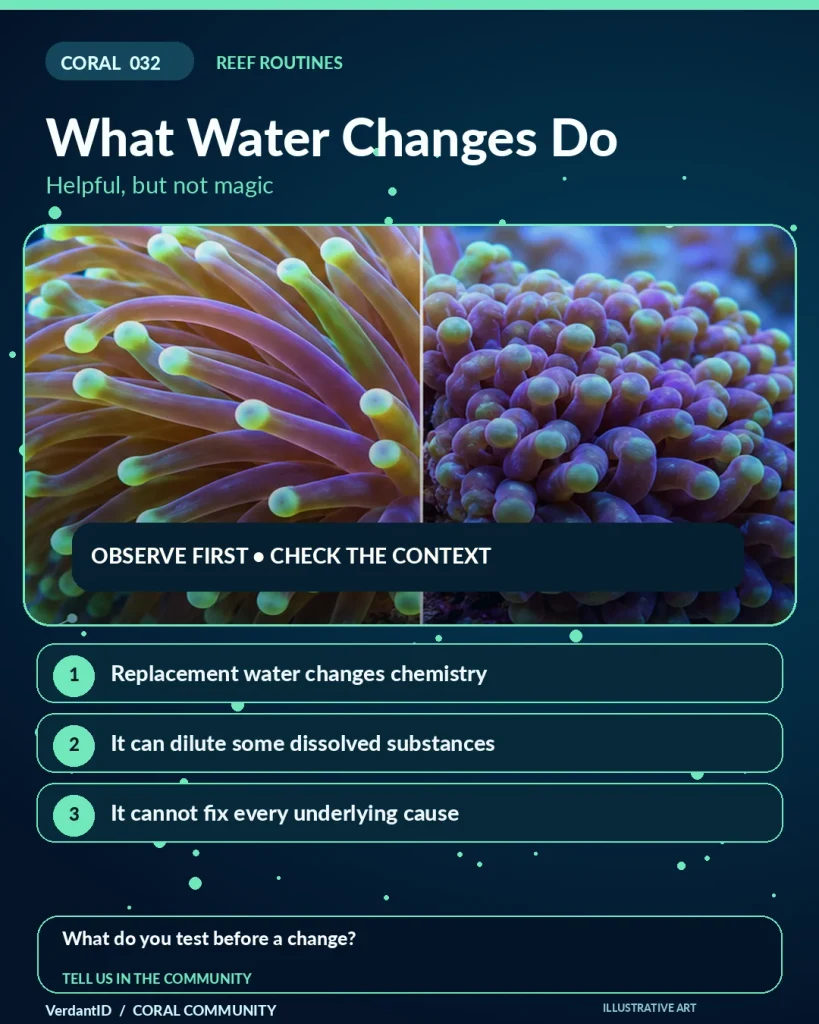
Water Changes: Define the Job Before Choosing a Volume

A water change can replace part of the aquarium water, dilute some dissolved substances and replenish others. It does not automatically identify or remove the cause of a problem. ## Be clear about the purpose Routine maintenance, correction of a verified contaminant and managin…

  • Coral Care
  • Reef Tank

0 responses · 0 reactions

guide

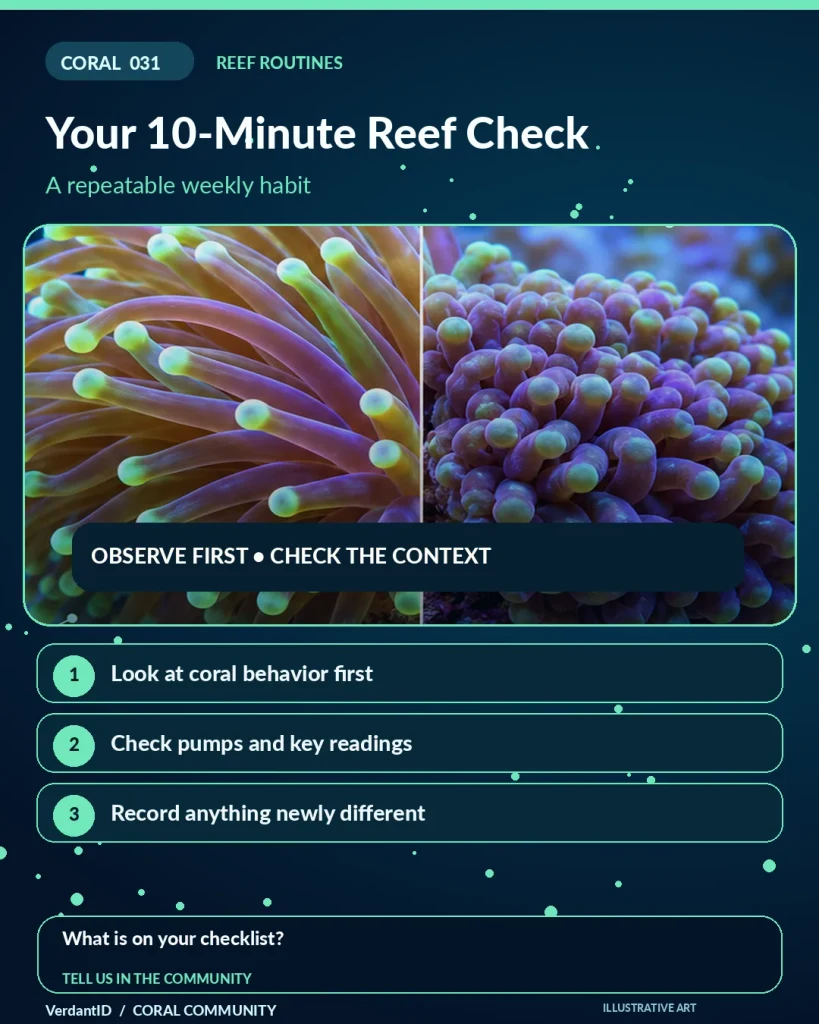
A Ten-Minute Reef Scan: What to Notice Each Week

A brief weekly scan can catch changes you might otherwise miss. It is an observation habit, not a claim that all maintenance, testing and troubleshooting can be completed in ten minutes. ## Work through five areas - Animals: compare tissue, extension and behavior with their usu…

  • Coral Care
  • Reef Tank

0 responses · 0 reactions

guide

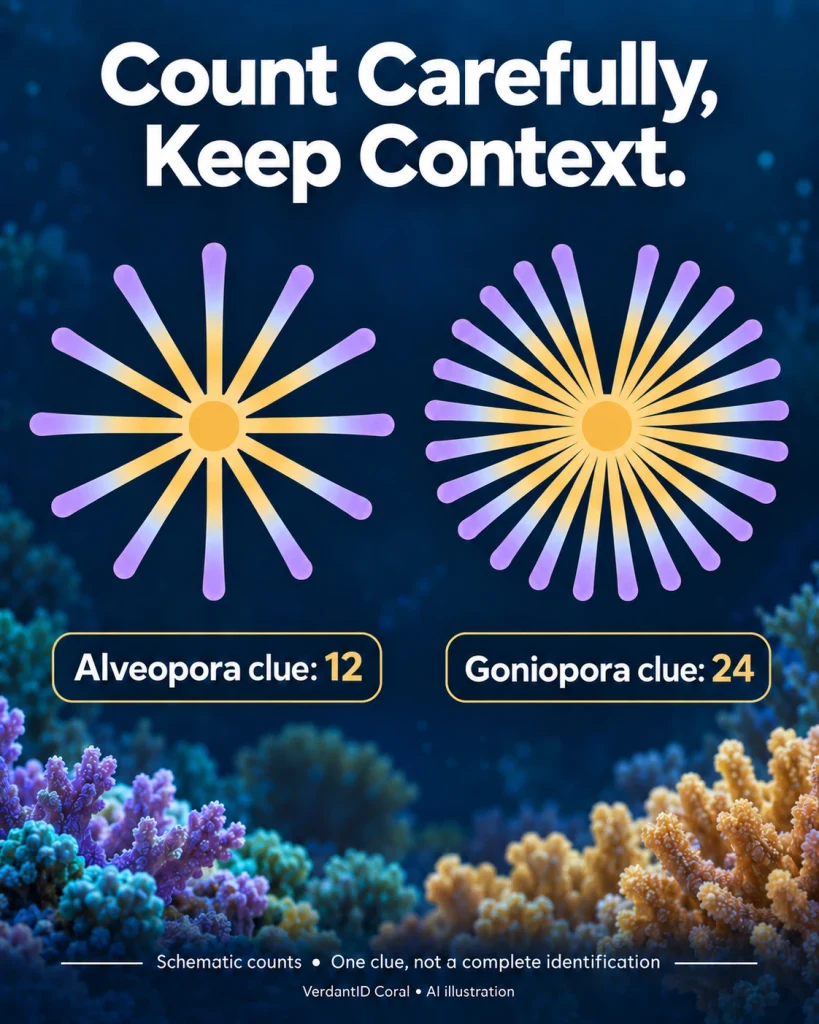
Goniopora or Alveopora? Count Carefully, Keep Context

Flowerpot-like polyps can look remarkably similar in a phone photograph. A useful comparison starts with tentacles and the colony, while recognizing what the image cannot show. ## A familiar distinguishing clue Reference guides commonly distinguish Alveopora polyps with 12 tent…

  • Coral Care

0 responses · 0 reactions

guide

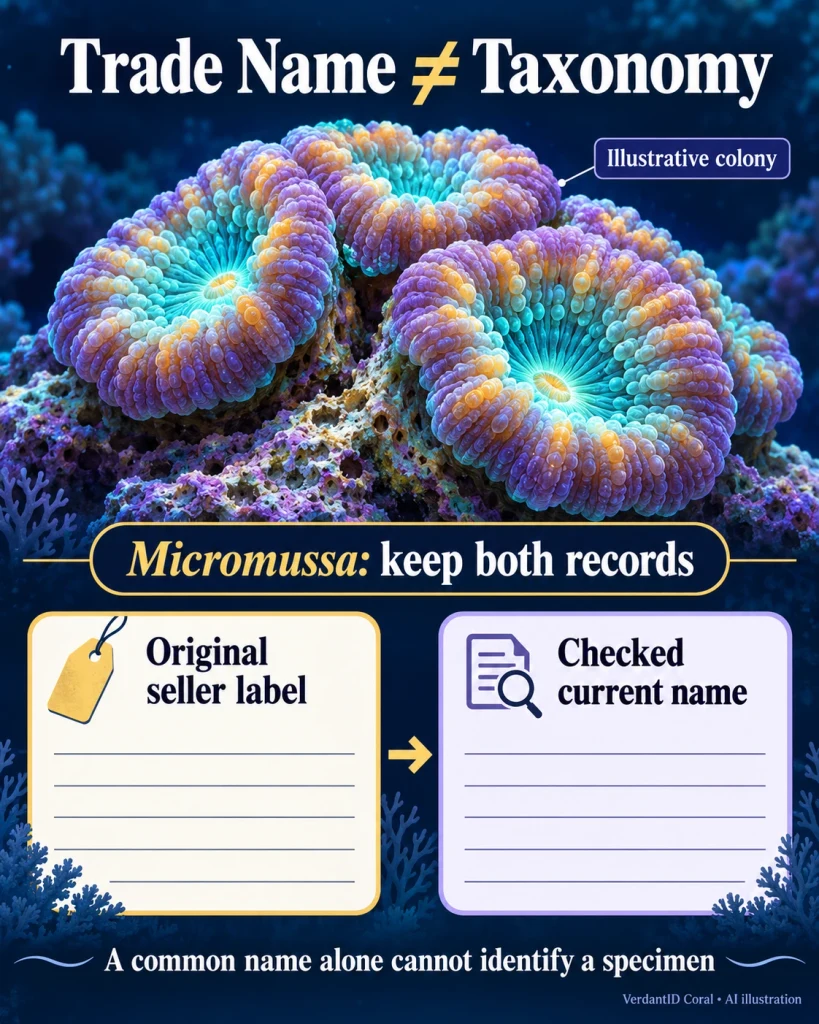
Micromussa: Keep the Trade Name and the Taxonomy

A coral sold as an acan may have paperwork or older references using a different scientific name. Micromussa illustrates why it helps to keep the original label alongside a checked current identification. ## Names can be revised Taxonomic research has moved some familiar aquari…

  • Coral Care

0 responses · 0 reactions

guide

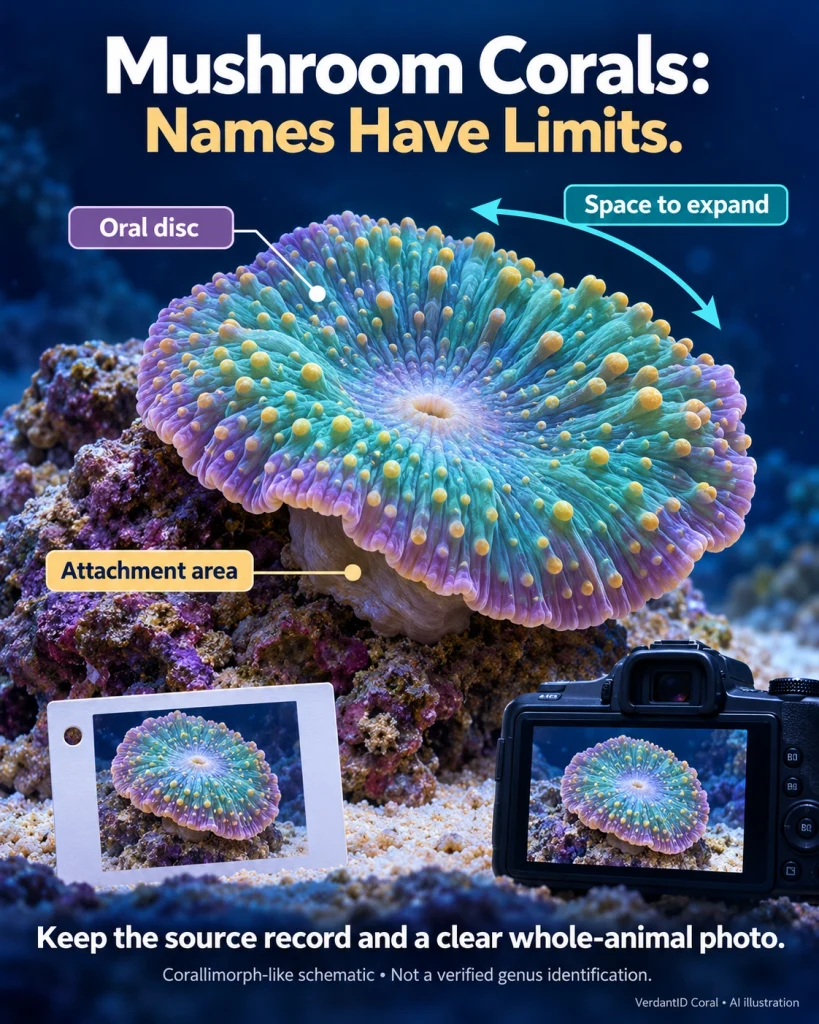
Mushroom Corals: A Hobby Name With Important Limits

The mushroom corals sold under names such as Discosoma and Rhodactis are corallimorpharians. They are related cnidarians rather than simply small versions of skeleton-building stony corals. ## Start with the name A trade label, color or patterned oral disc does not guarantee a …

  • Coral Care

0 responses · 0 reactions

guide

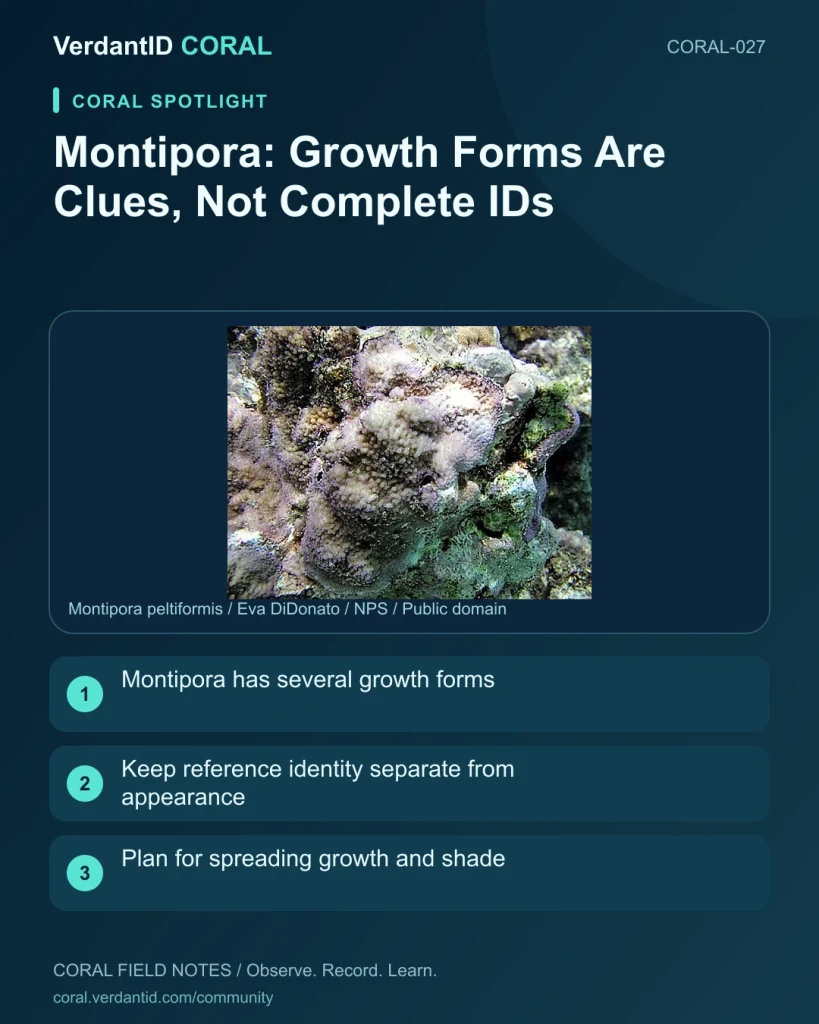
Montipora: Growth Forms Are Clues, Not Complete IDs

Montipora colonies can show plating, branching, encrusting and mixed growth forms. A shape is a useful description, but a plate or a branch does not establish the genus or species on its own. ## Separate form from identity Photograph the overall colony and visible surface detai…

  • Coral Care

0 responses · 0 reactions

guide

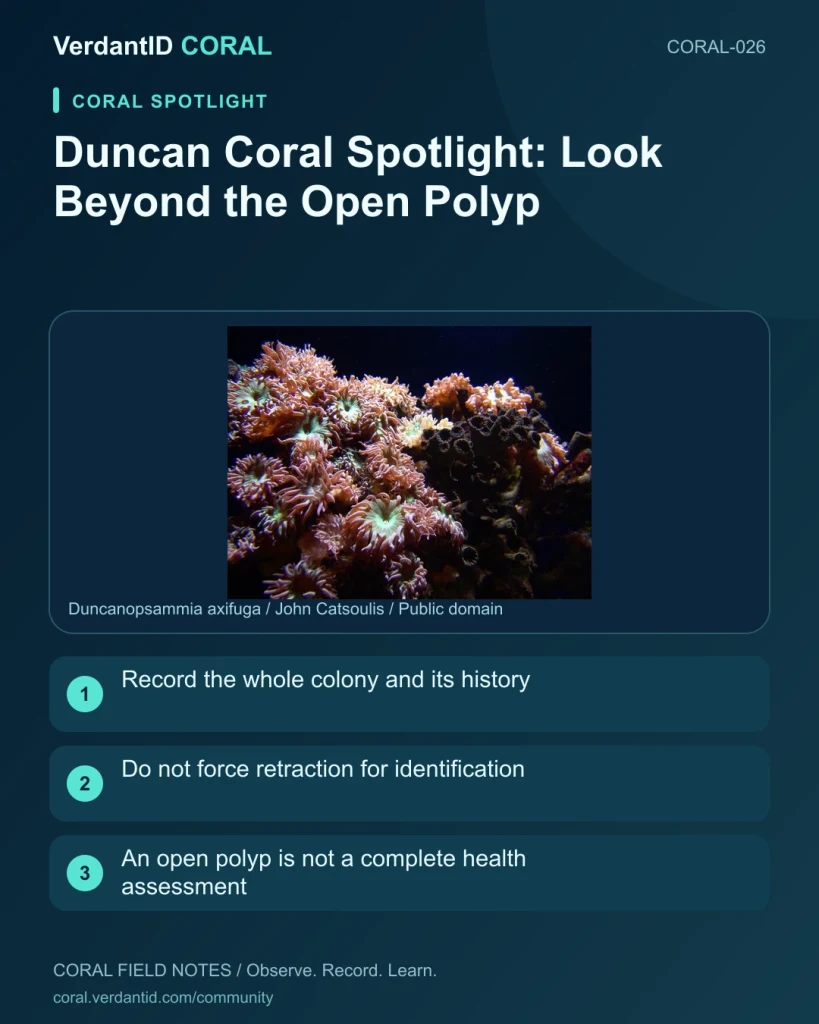
Duncan Coral Spotlight: Look Beyond the Open Polyp

Duncan coral is commonly associated with Duncanopsammia axifuga. Its conspicuous polyps make it an appealing subject for regular photographs, but a single moment of extension is only one observation. ## Notice the whole colony An open polyp can obscure the branching skeleton be…

  • Coral Care

0 responses · 0 reactions

guide

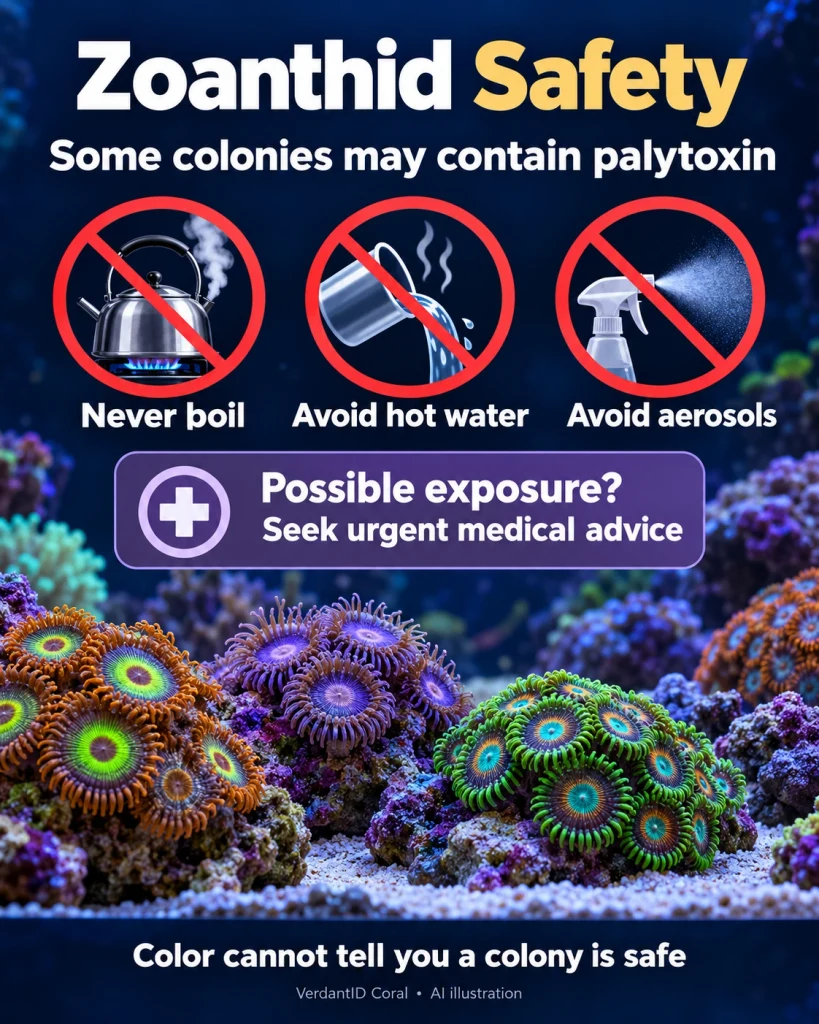
Zoanthid Safety: Prevent Heat and Aerosol Exposure

Some zoanthids and related palythoas can contain palytoxin. Appearance and a reassuring trade name cannot tell you that a colony is safe to handle or remove aggressively. ## Avoid the hazardous shortcuts Do not boil rocks or colonies, apply hot water, pressure-spray them, or us…

  • Coral Care

0 responses · 0 reactions

guide

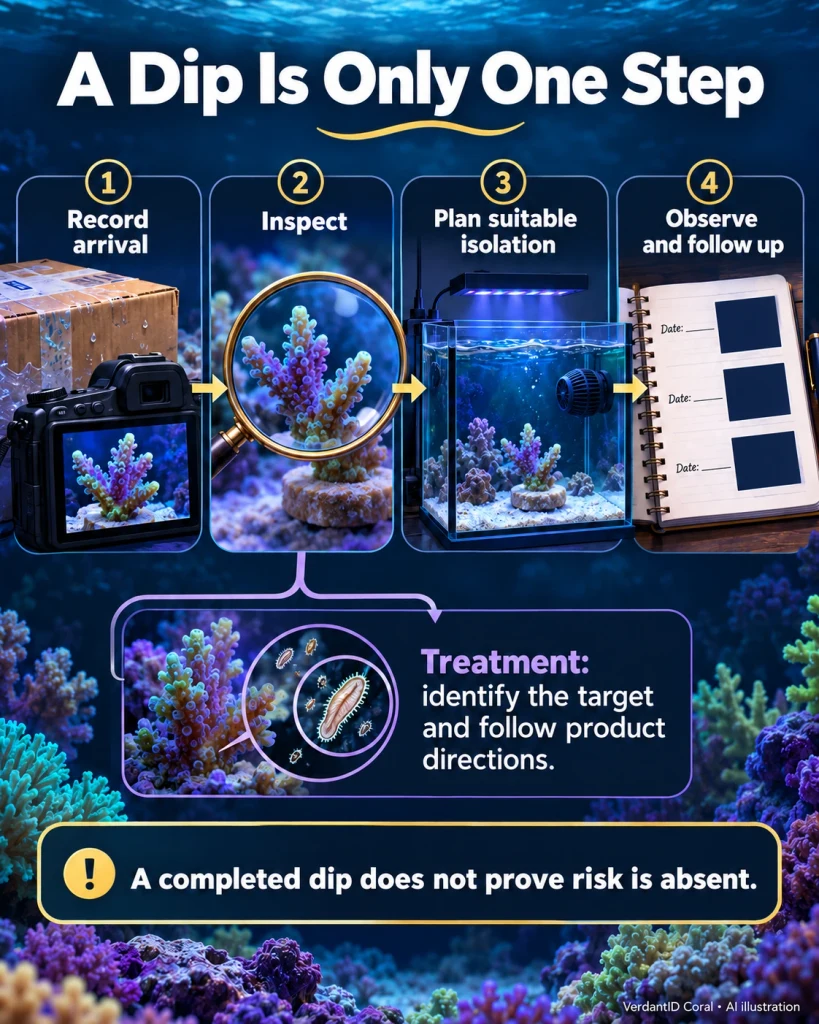
A Dip Is One Step, Not a Complete Biosecurity Plan

A product labelled as a coral dip does not make every organism, life stage or disease risk disappear. Think of arrival care as a sequence of decisions supported by identification and observation. ## Start with a record Keep supplier information, best-supported identity, arrival…

  • Coral Care

0 responses · 0 reactions

guide

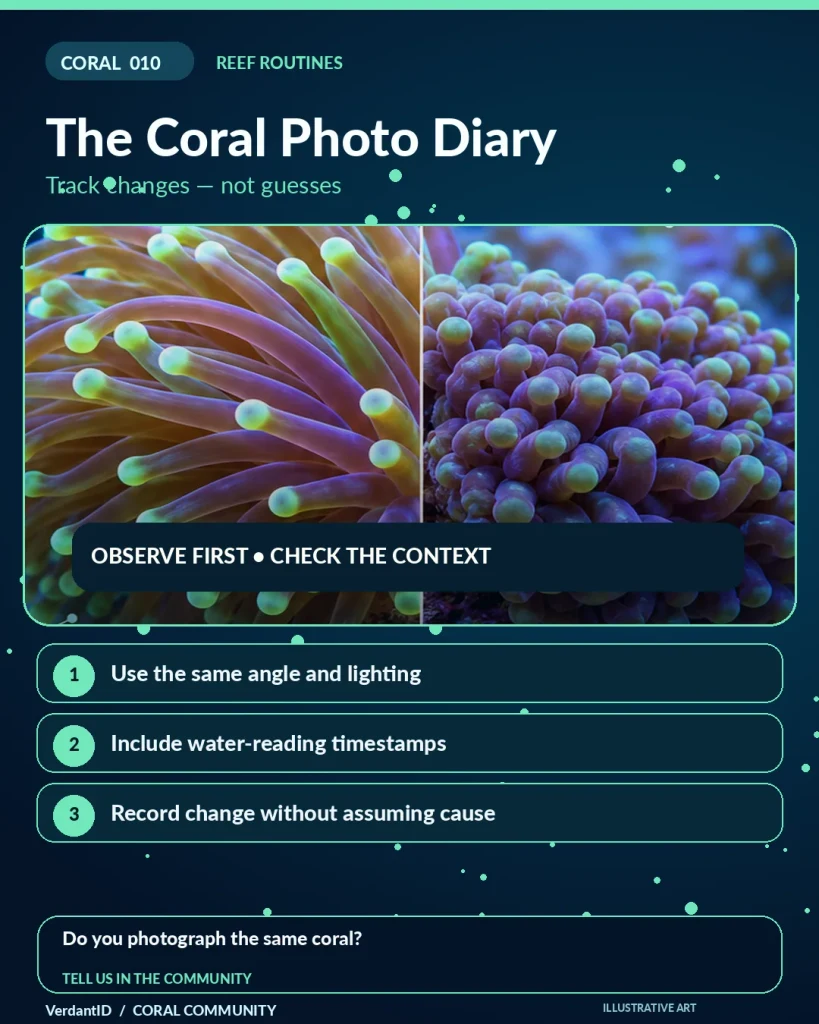
A Coral Observation Diary: Days 1, 7, 14 and 30

A repeat photograph is most useful when the conditions around the photograph are repeatable. Use this diary to document a concern without promising that every coral will recover on a schedule. ## Day 1: establish the record Choose one coral and save a clear whole-colony image p…

  • Coral Care
  • Reef Tank

0 responses · 0 reactions

guide

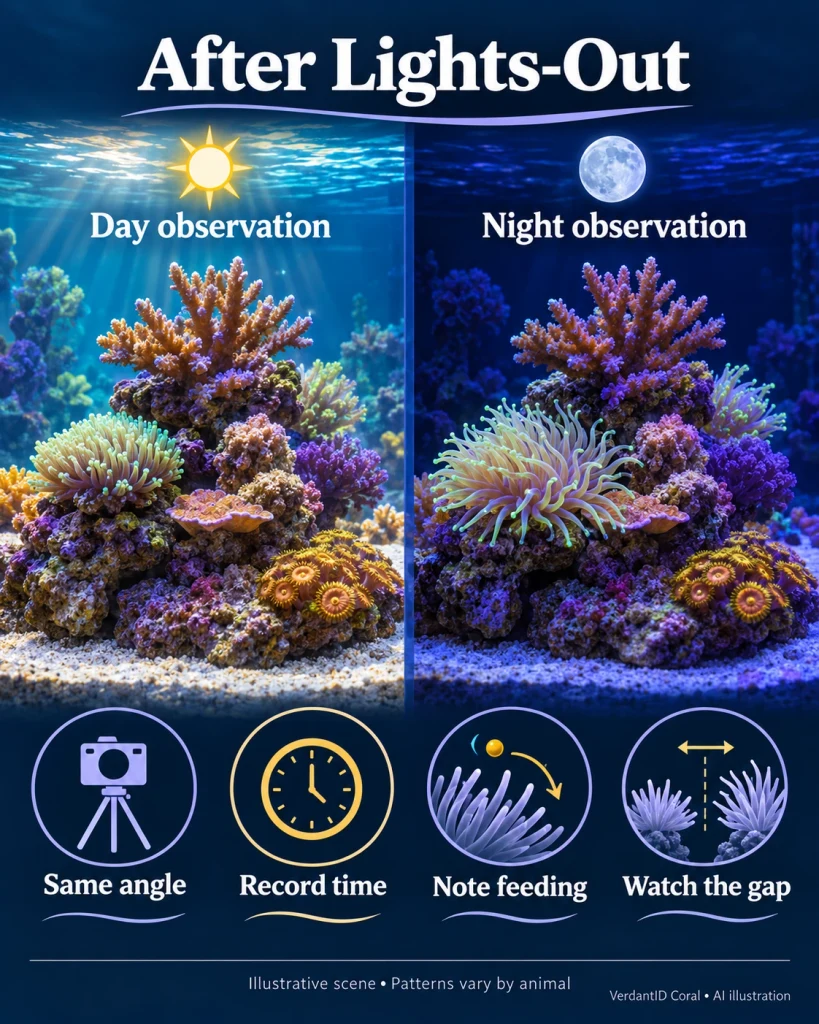
Your Reef After Lights-Out: Observe Before You Change

The daytime view is only part of a coral's daily pattern. A short, quiet look after lights-out can reveal a different arrangement of tentacles and neighboring animals. ## Expect differences, not one universal pattern Some corals extend feeding tentacles more prominently at nigh…

  • Coral Care

0 responses · 0 reactions

guide

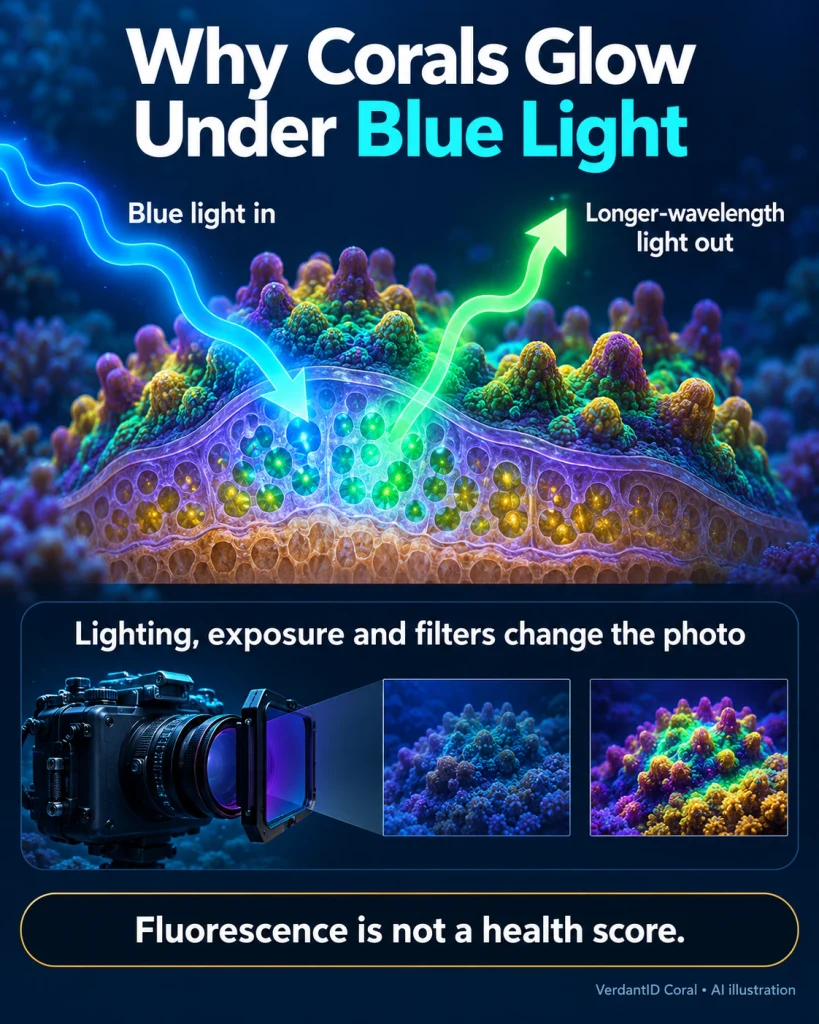
Why Blue Light Makes Coral Colors Look Different

A reef can look dramatically different when its lighting changes from a broad white appearance to strong blue illumination. That visual change combines biology, lighting and the camera. ## Fluorescence needs incoming light Fluorescent molecules absorb light and emit some of tha…

  • Coral Care

0 responses · 0 reactions

guide

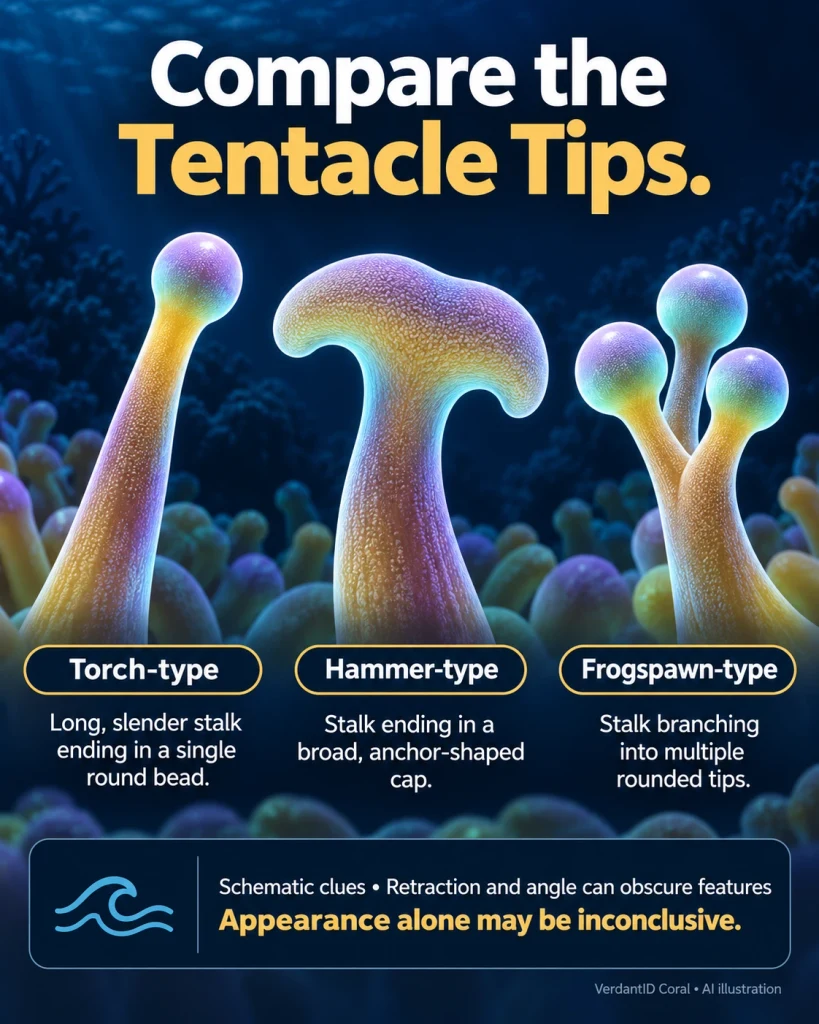
Torch, Hammer or Frogspawn? Compare the Clues

Similar movement and bright colors can make these corals look alike across a shop display. Start with visible structure, and keep the name provisional when the photograph is incomplete. ## Tentacle tips are a clue Torch corals commonly have long tentacles ending in single round…

  • Coral Care

0 responses · 0 reactions

guide

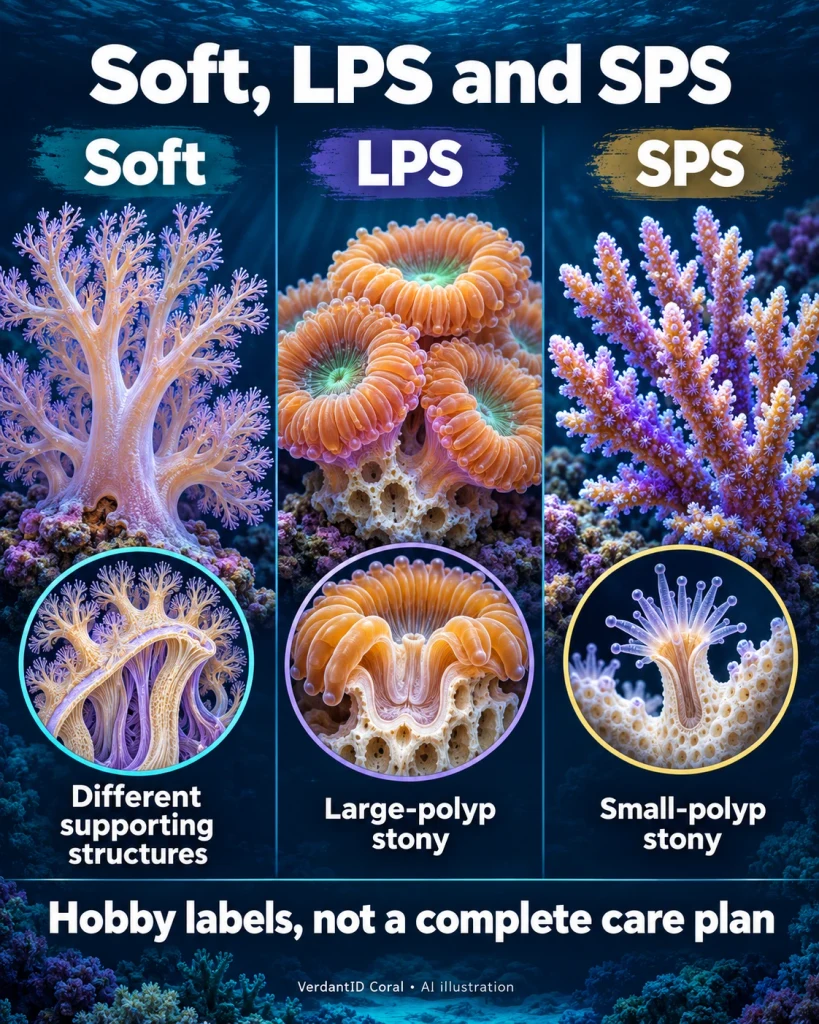
Soft, LPS and SPS: Useful Labels, Limited Rules

Soft coral, LPS and SPS are convenient aquarium labels. They can help start a conversation, but they are a poor substitute for knowing which animal you actually have. ## What the labels mean Stony corals build hard calcium-carbonate skeletons. LPS and SPS are informal hobby sho…

  • Coral Care

0 responses · 0 reactions

guide

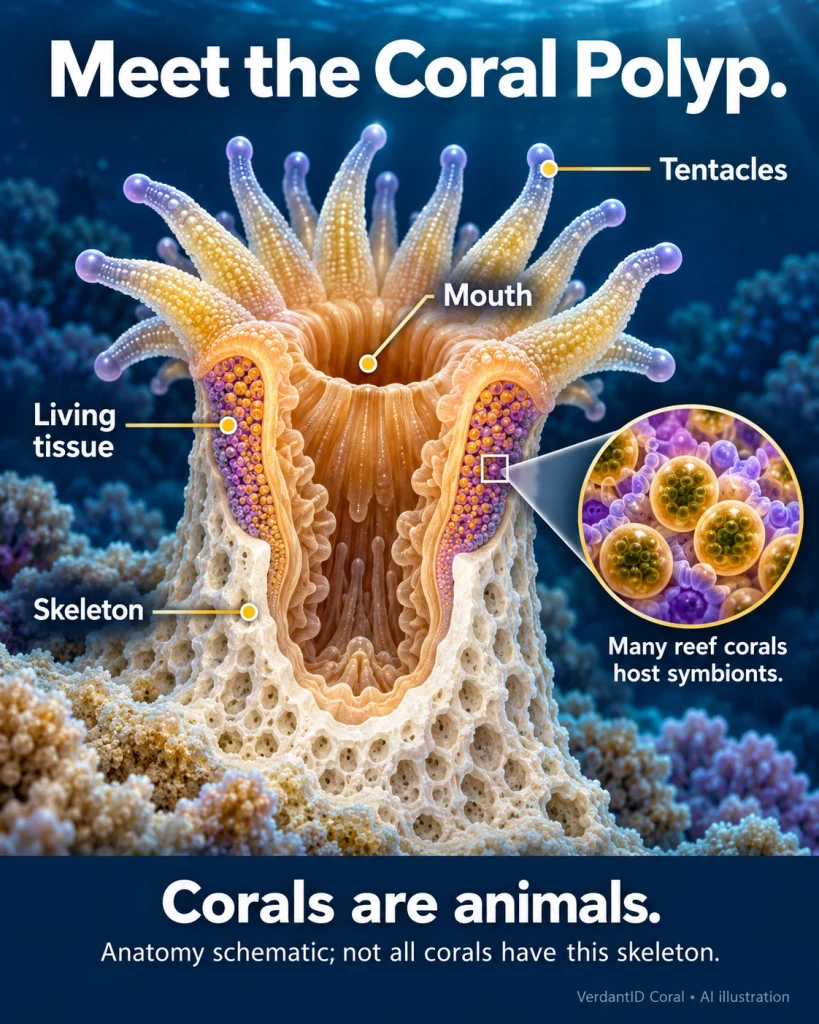
Corals Are Animals: Meet the Polyp

A coral may stay in one place and look like an underwater flower, but its living tissue belongs to an animal. Learning to recognize the polyp changes how you look at both growth and stress. ## One animal, repeated A polyp has a mouth surrounded by tentacles. Many corals form co…

  • Coral Care

0 responses · 0 reactions