Coral Health Intelligence

Ask · Learn · Share · Grow

Coral Community

Questions, discussions, and practical help from the Verdant community.

Community is read-only right now. Browse questions and answers; posting is not yet available.

Community feed

All Discussions

Questions, guides, and discussions from across the Coral Community.

discussion

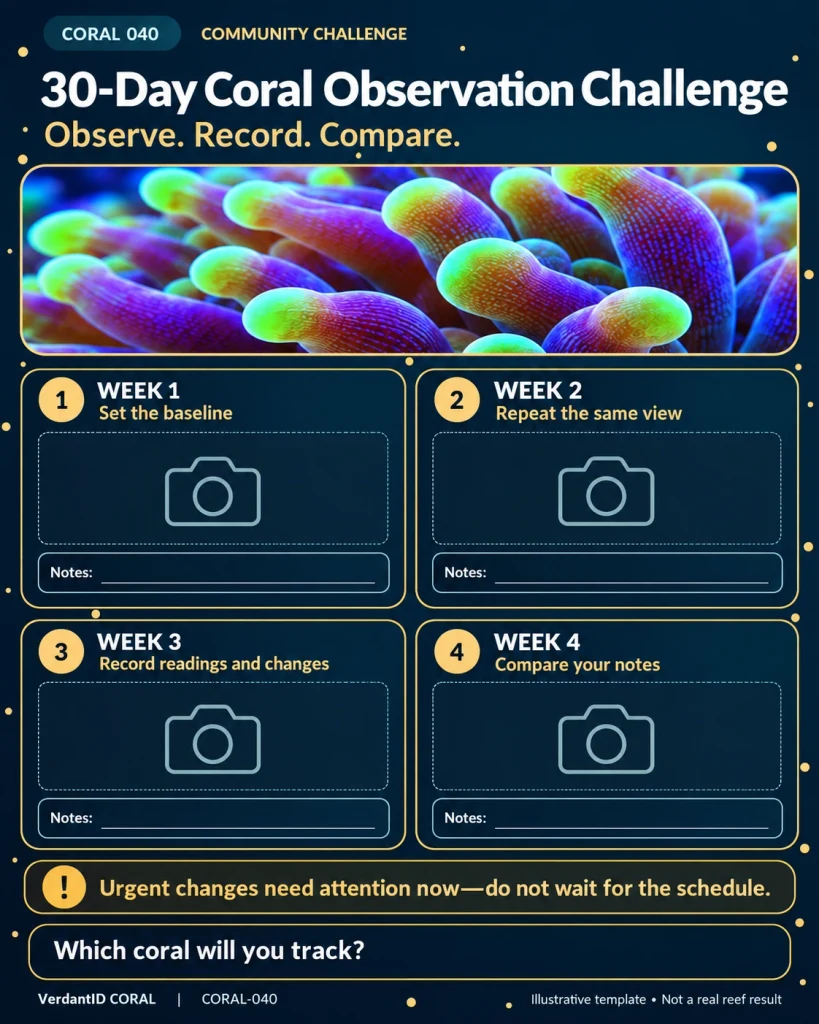
A 30-Day Coral Observation Challenge

Choose one coral and build a small observation record over the next month. The challenge is to notice and document; it does not ask you to trigger changes or promise a transformation. ## Week 1: set the baseline Save a whole-colony view and a clear close-up. Record identity as …
  • Coral Care
  • Reef Tank

0 responses · 0 reactions

discussion

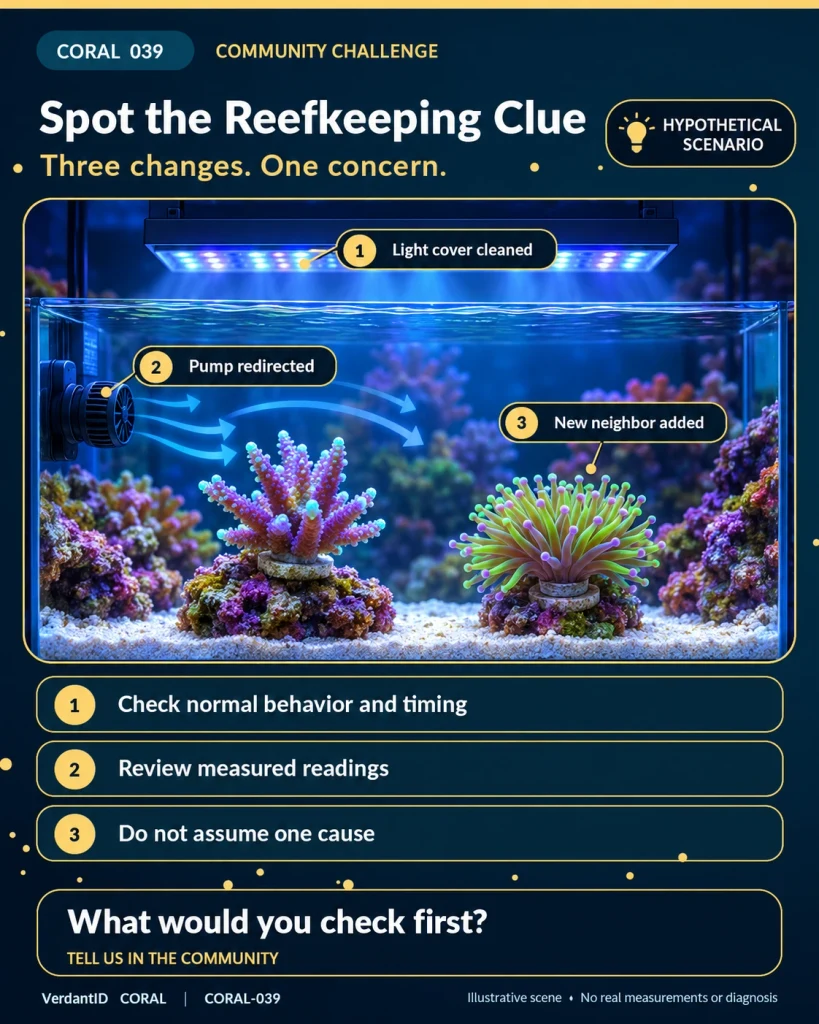
Spot the Reefkeeping Clue: Three Changes, One Concern

Here is a hypothetical situation, not a real customer diagnosis: a keeper cleans the light cover, redirects a powerhead and adds a neighboring frag. Later, one coral is less extended. What would you check first? ## Three clues to consider - A clean cover may change light reachi…

  • Coral Care
  • Reef Tank

0 responses · 0 reactions

discussion

Which Coral Taught You the Most? Share the Context

The coral that challenged one keeper may be straightforward in another system. Instead of making a universal difficulty ranking, let's compare the conditions and lessons behind those experiences. ## Start with the animal Share the best-supported common or scientific name and ho…

  • Coral Care
  • Reef Tank

0 responses · 0 reactions

discussion

Reef Then and Now: Share the Story Behind the Photos

A pair of reef photographs can start an interesting conversation when the dates and the story are honest. This invitation does not include a fabricated member tank or an invented success story. ## Choose your own comparison Use photographs you took or have permission to share. …

  • Coral Care
  • Reef Tank

0 responses · 0 reactions

guide

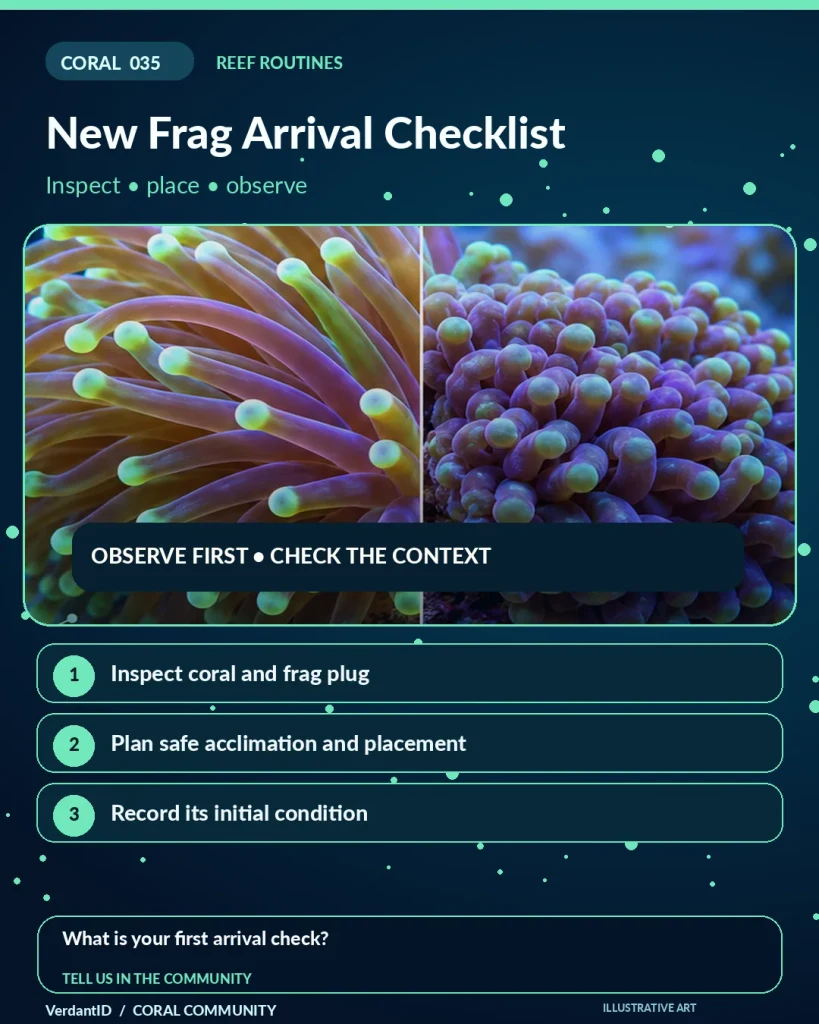
New Coral Arrival: Prepare the Record Before the Box

Arrival care begins before opening the delivery. A prepared observation space, supplier instructions and a place to record the coral's history reduce rushed decisions. ## Before arrival Save the order details and best-supported identification. Ask the supplier about shipping, p…

  • Coral Care
  • Reef Tank

0 responses · 0 reactions

guide

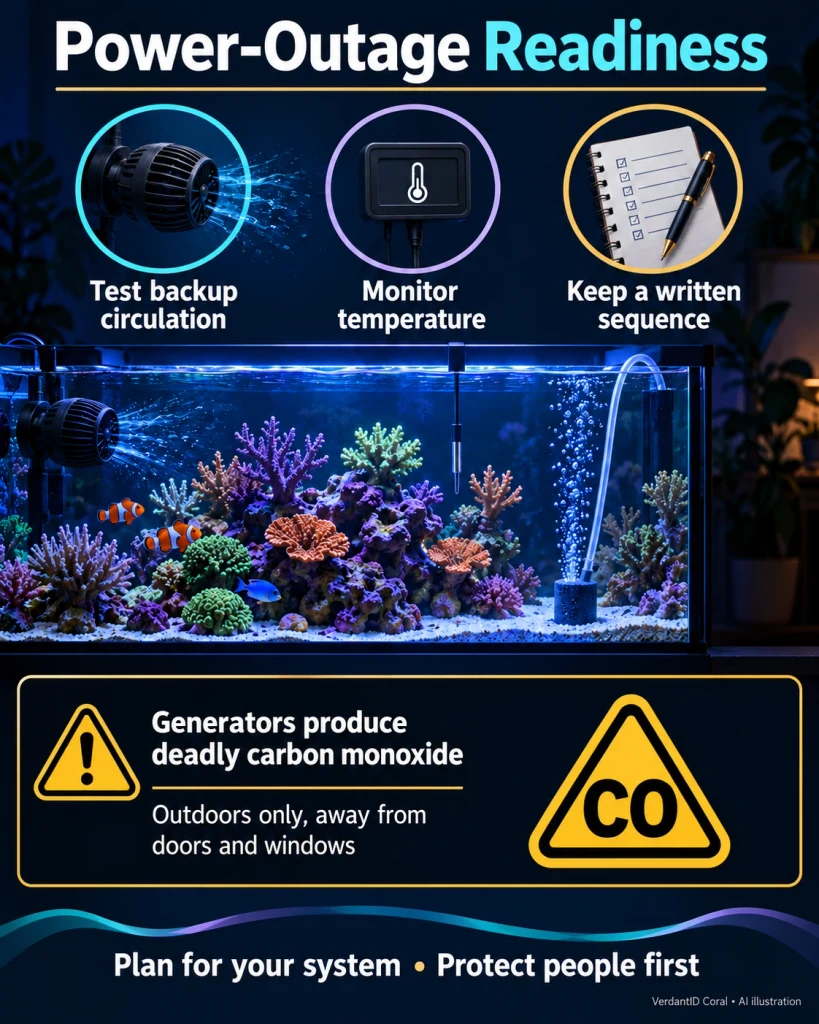
Power-Outage Readiness: Plan Before the Lights Go Out

An outage plan is easier to use when the equipment has already been tested. Decide how to support essential circulation, gas exchange and temperature for your system before an emergency. ## Inventory the essentials List equipment, actual power draw, battery or backup compatibil…

  • Coral Care

0 responses · 0 reactions

guide

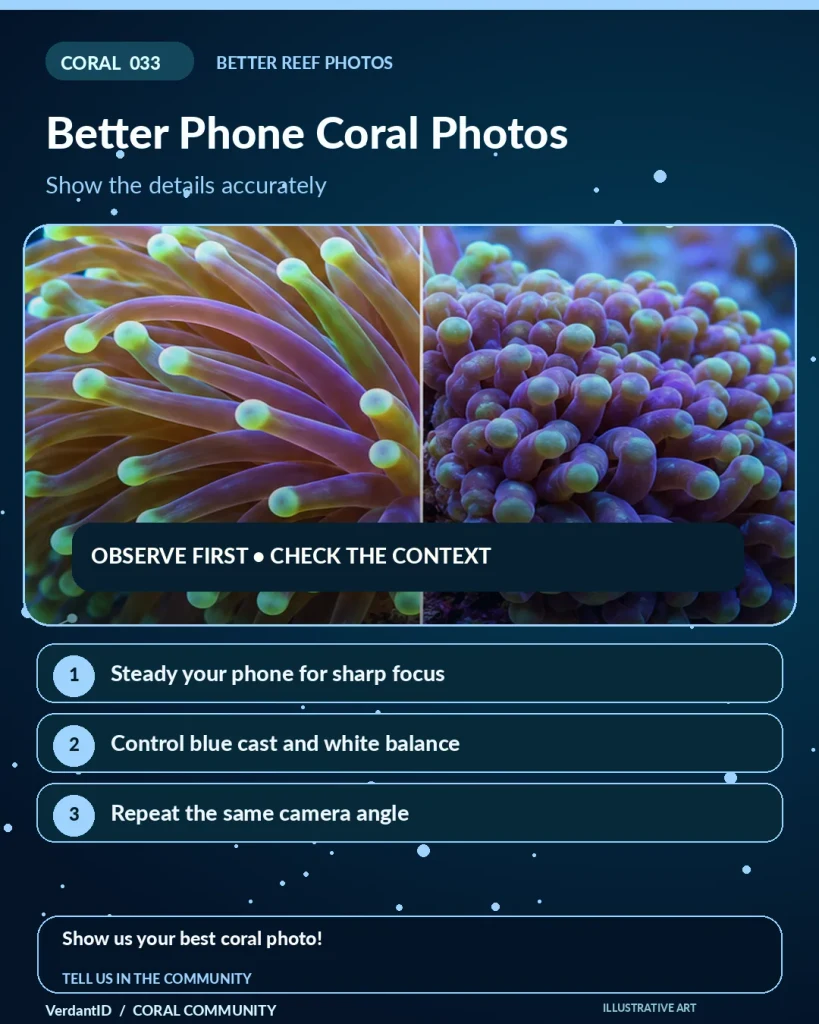
Better Coral Phone Photos: Keep Detail and Context

A beautiful reef picture and a useful observation picture have overlapping but different goals. For an identification or concern, accurate detail and a repeatable view matter more than dramatic saturation. ## Take a useful pair Save one image of the whole colony and its placeme…

  • Coral Care

0 responses · 0 reactions

guide

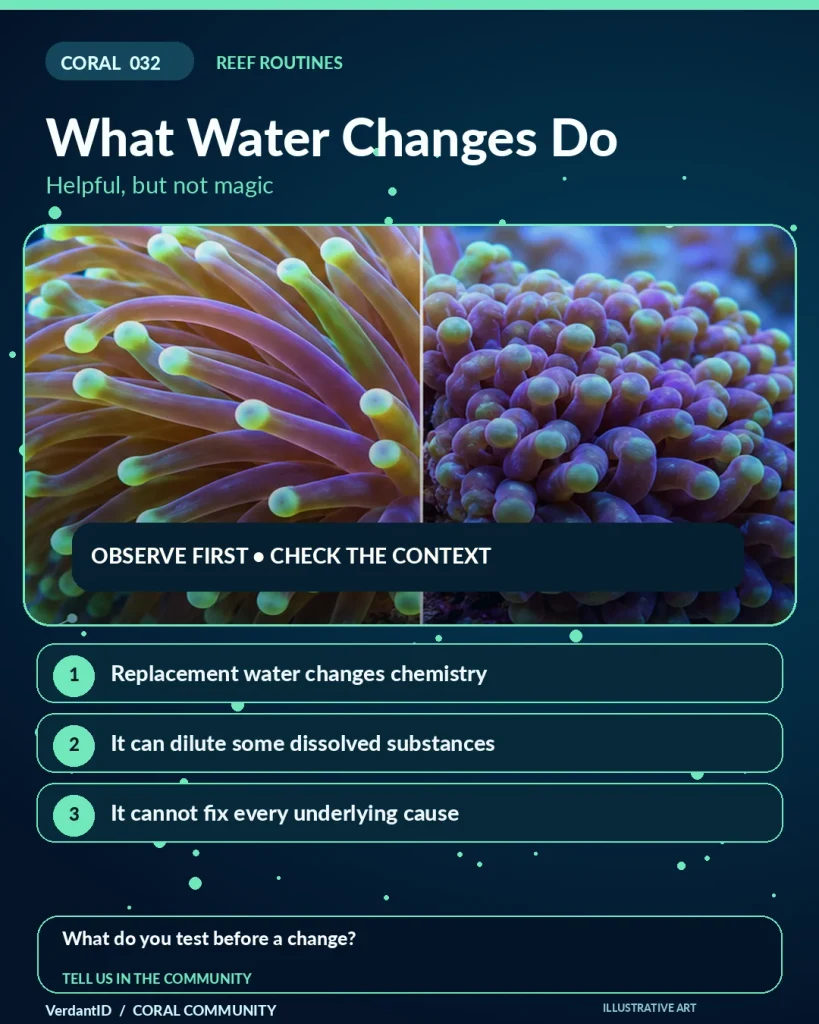
Water Changes: Define the Job Before Choosing a Volume

A water change can replace part of the aquarium water, dilute some dissolved substances and replenish others. It does not automatically identify or remove the cause of a problem. ## Be clear about the purpose Routine maintenance, correction of a verified contaminant and managin…

  • Coral Care
  • Reef Tank

0 responses · 0 reactions

guide

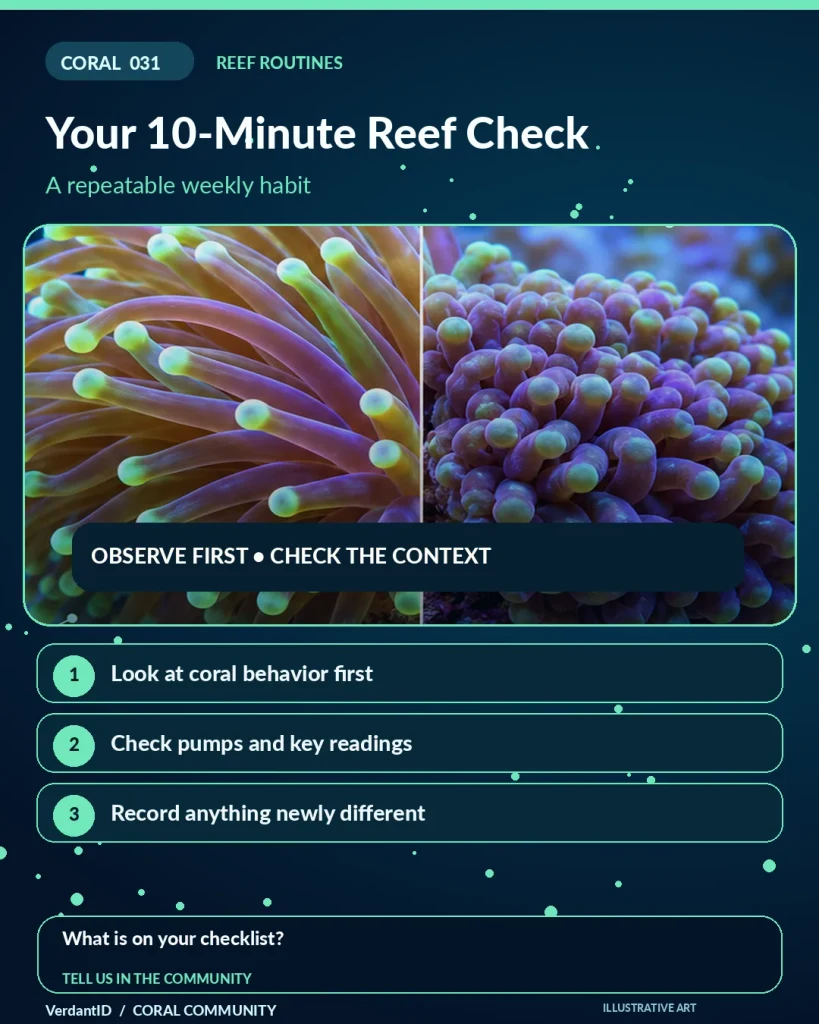
A Ten-Minute Reef Scan: What to Notice Each Week

A brief weekly scan can catch changes you might otherwise miss. It is an observation habit, not a claim that all maintenance, testing and troubleshooting can be completed in ten minutes. ## Work through five areas - Animals: compare tissue, extension and behavior with their usu…

  • Coral Care
  • Reef Tank

0 responses · 0 reactions

guide

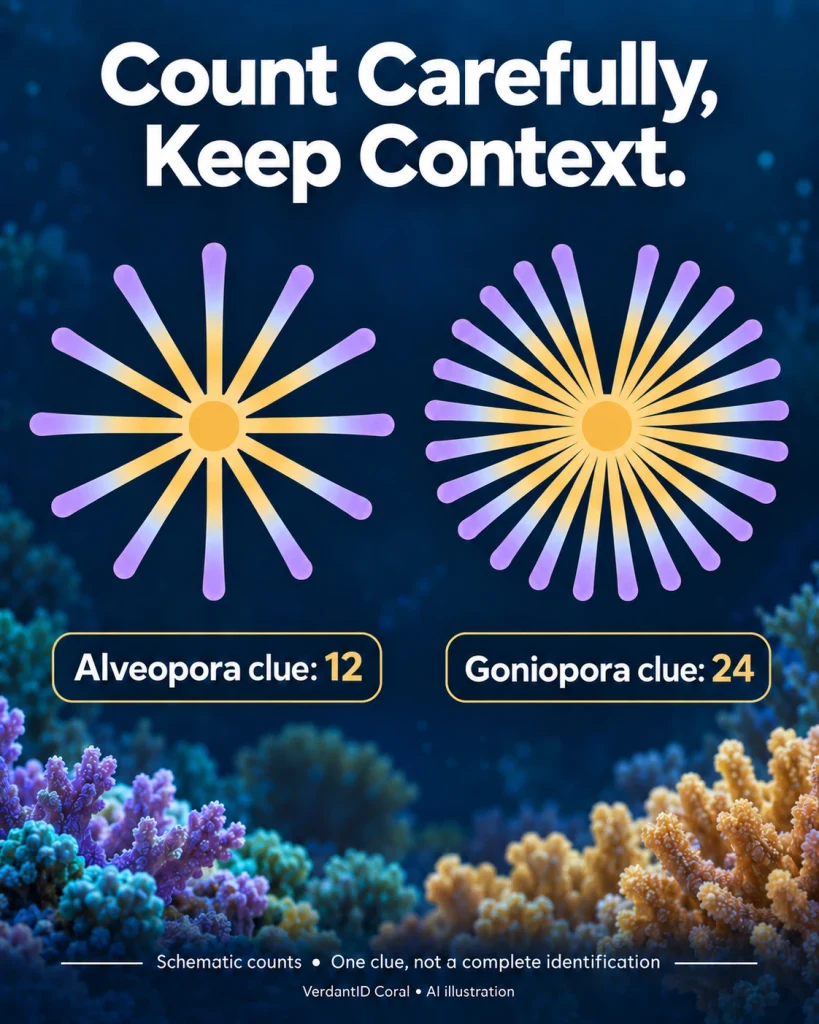
Goniopora or Alveopora? Count Carefully, Keep Context

Flowerpot-like polyps can look remarkably similar in a phone photograph. A useful comparison starts with tentacles and the colony, while recognizing what the image cannot show. ## A familiar distinguishing clue Reference guides commonly distinguish Alveopora polyps with 12 tent…

  • Coral Care

0 responses · 0 reactions

guide

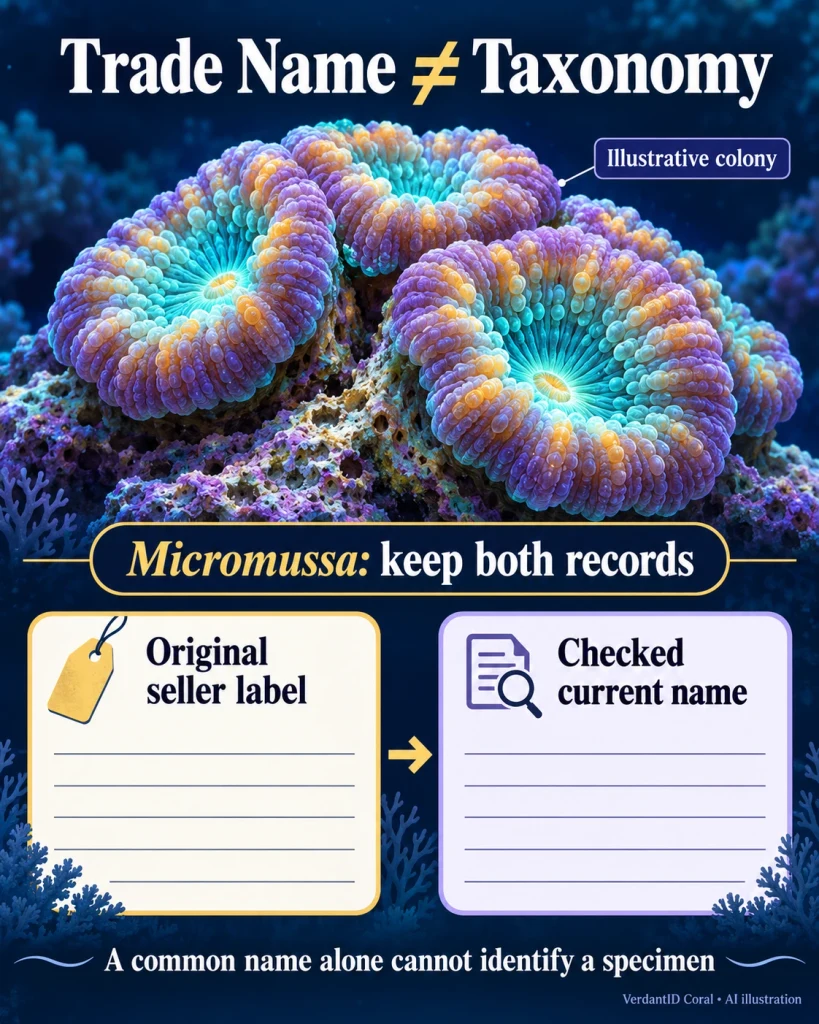
Micromussa: Keep the Trade Name and the Taxonomy

A coral sold as an acan may have paperwork or older references using a different scientific name. Micromussa illustrates why it helps to keep the original label alongside a checked current identification. ## Names can be revised Taxonomic research has moved some familiar aquari…

  • Coral Care

0 responses · 0 reactions

guide

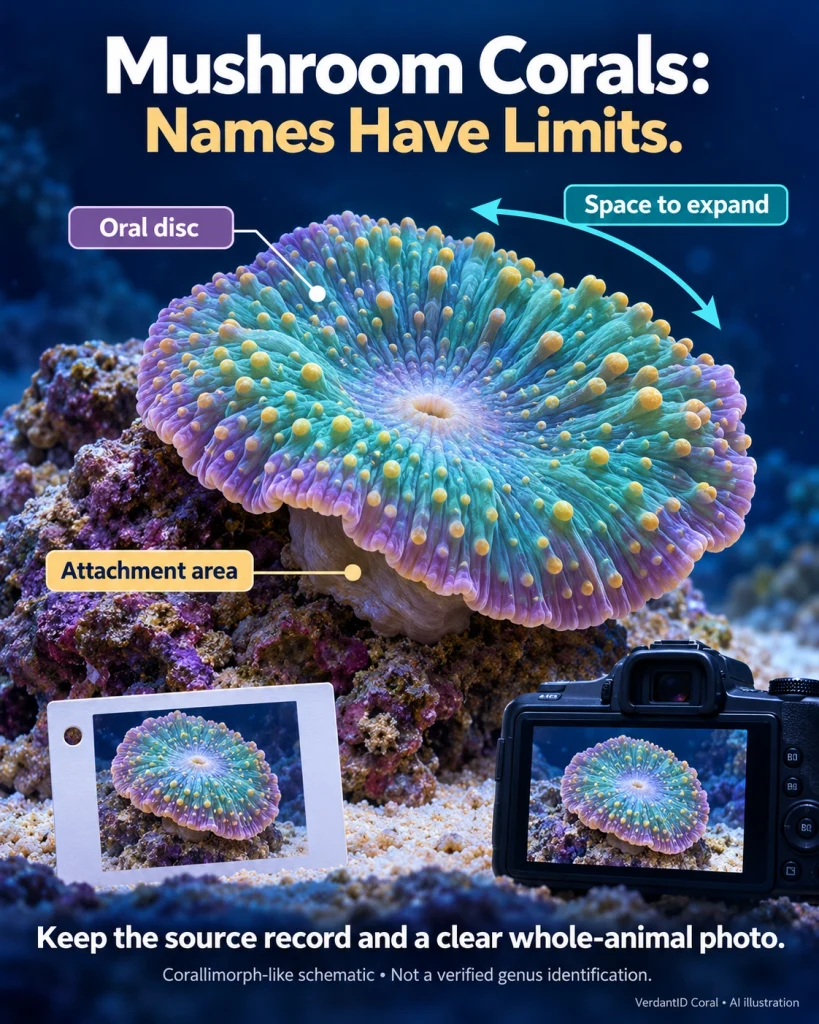
Mushroom Corals: A Hobby Name With Important Limits

The mushroom corals sold under names such as Discosoma and Rhodactis are corallimorpharians. They are related cnidarians rather than simply small versions of skeleton-building stony corals. ## Start with the name A trade label, color or patterned oral disc does not guarantee a …

  • Coral Care

0 responses · 0 reactions

guide

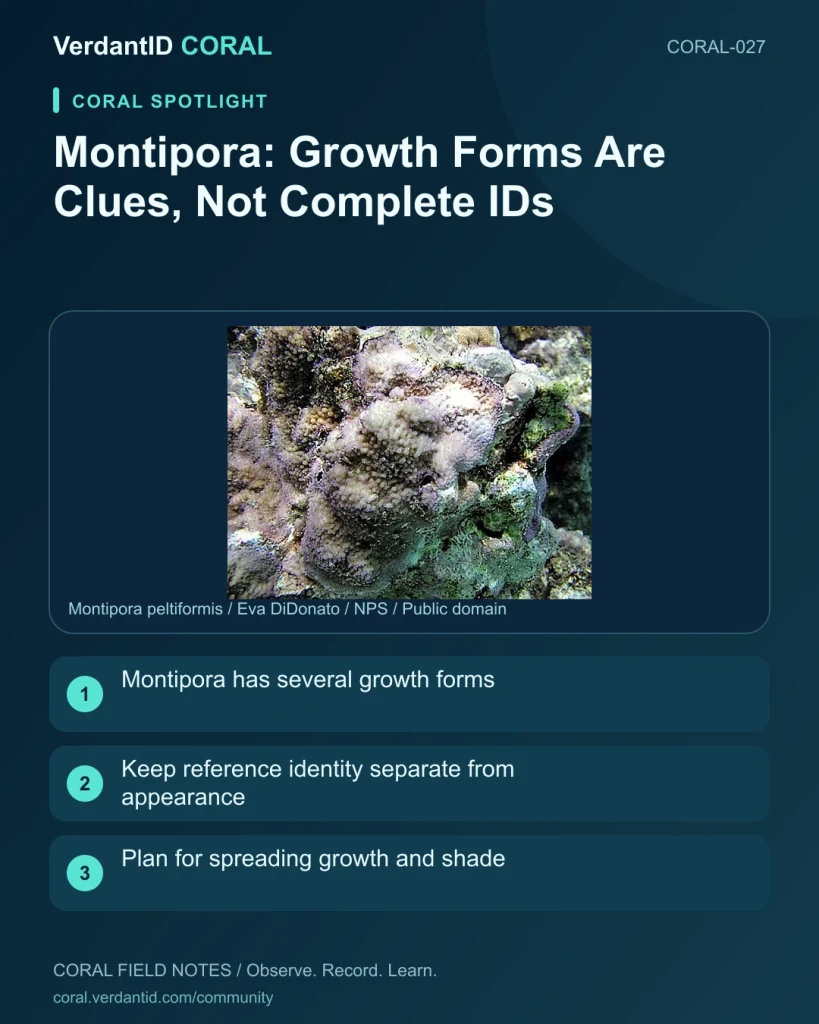
Montipora: Growth Forms Are Clues, Not Complete IDs

Montipora colonies can show plating, branching, encrusting and mixed growth forms. A shape is a useful description, but a plate or a branch does not establish the genus or species on its own. ## Separate form from identity Photograph the overall colony and visible surface detai…

  • Coral Care

0 responses · 0 reactions

guide

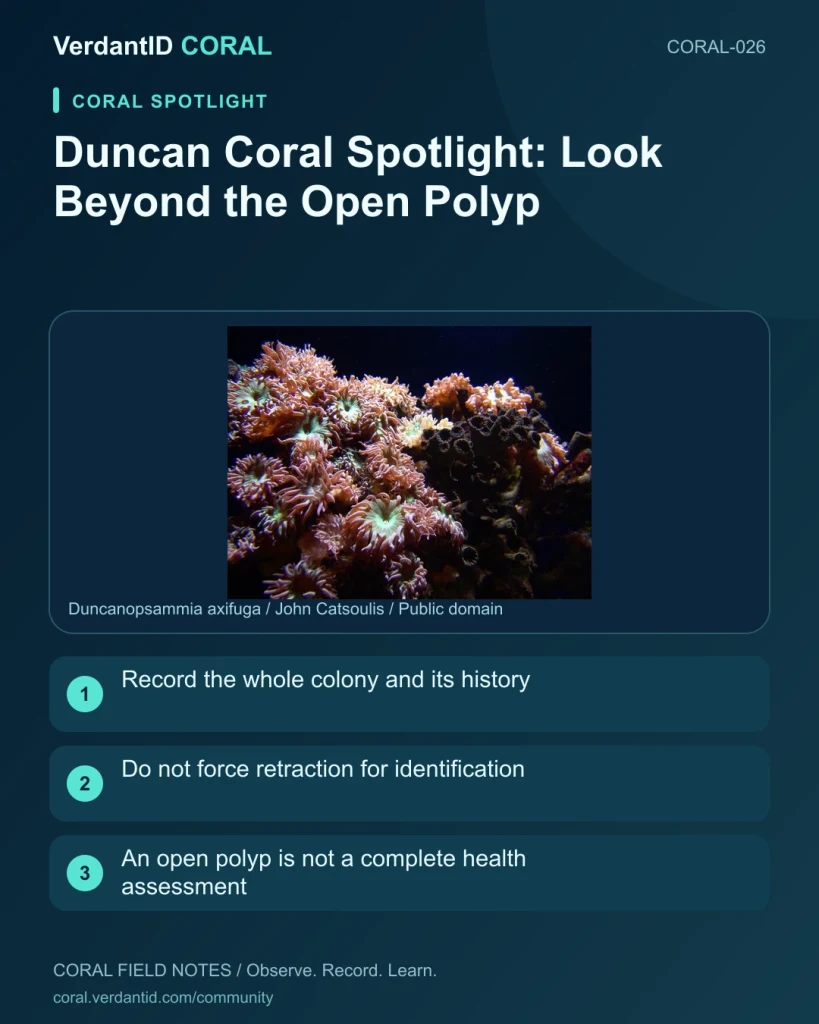
Duncan Coral Spotlight: Look Beyond the Open Polyp

Duncan coral is commonly associated with Duncanopsammia axifuga. Its conspicuous polyps make it an appealing subject for regular photographs, but a single moment of extension is only one observation. ## Notice the whole colony An open polyp can obscure the branching skeleton be…

  • Coral Care

0 responses · 0 reactions

guide

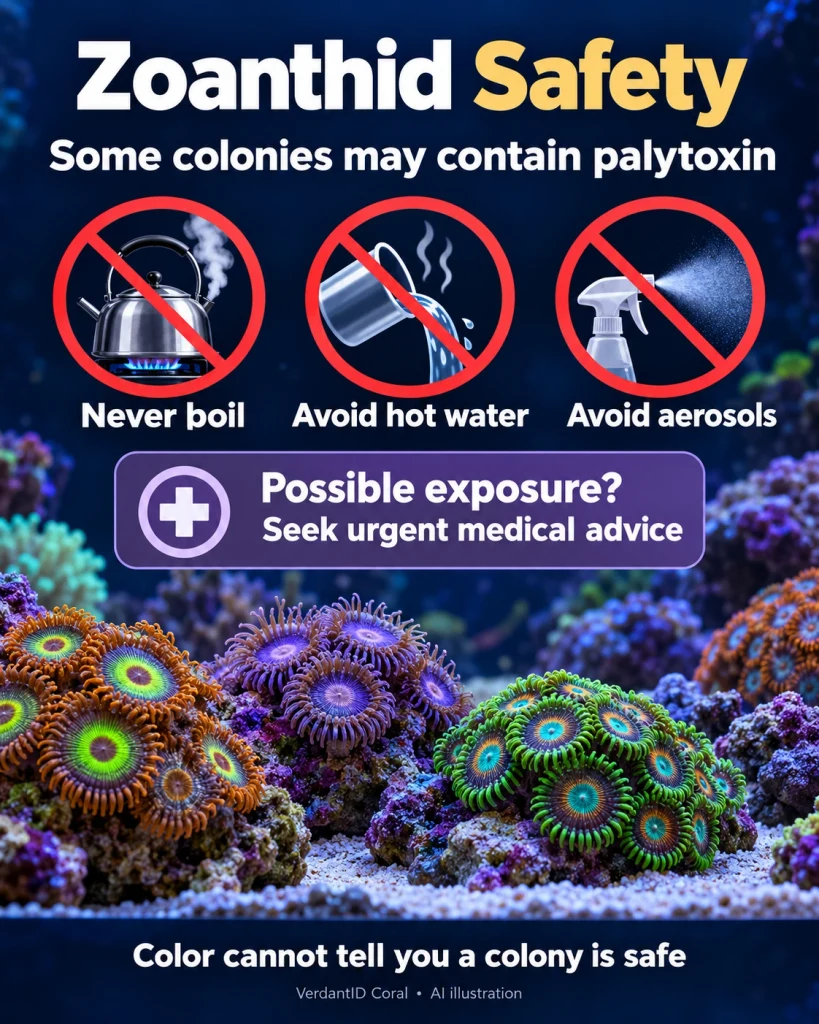
Zoanthid Safety: Prevent Heat and Aerosol Exposure

Some zoanthids and related palythoas can contain palytoxin. Appearance and a reassuring trade name cannot tell you that a colony is safe to handle or remove aggressively. ## Avoid the hazardous shortcuts Do not boil rocks or colonies, apply hot water, pressure-spray them, or us…

  • Coral Care

0 responses · 0 reactions

guide

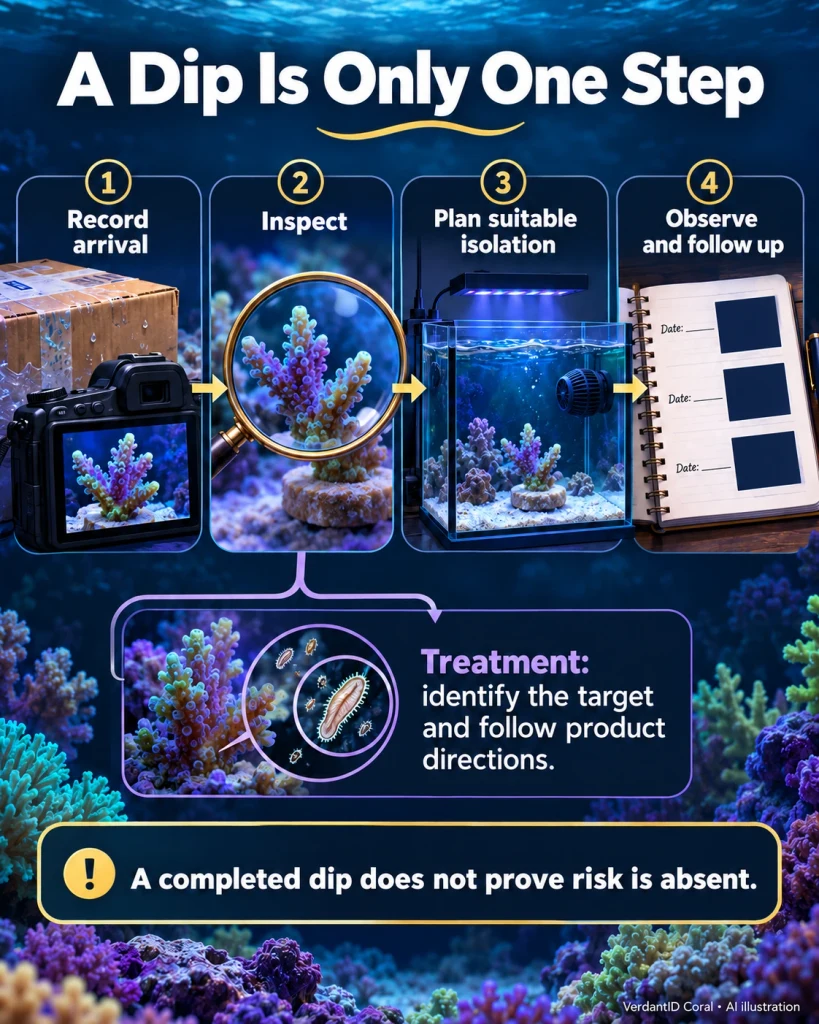
A Dip Is One Step, Not a Complete Biosecurity Plan

A product labelled as a coral dip does not make every organism, life stage or disease risk disappear. Think of arrival care as a sequence of decisions supported by identification and observation. ## Start with a record Keep supplier information, best-supported identity, arrival…

  • Coral Care

0 responses · 0 reactions

guide

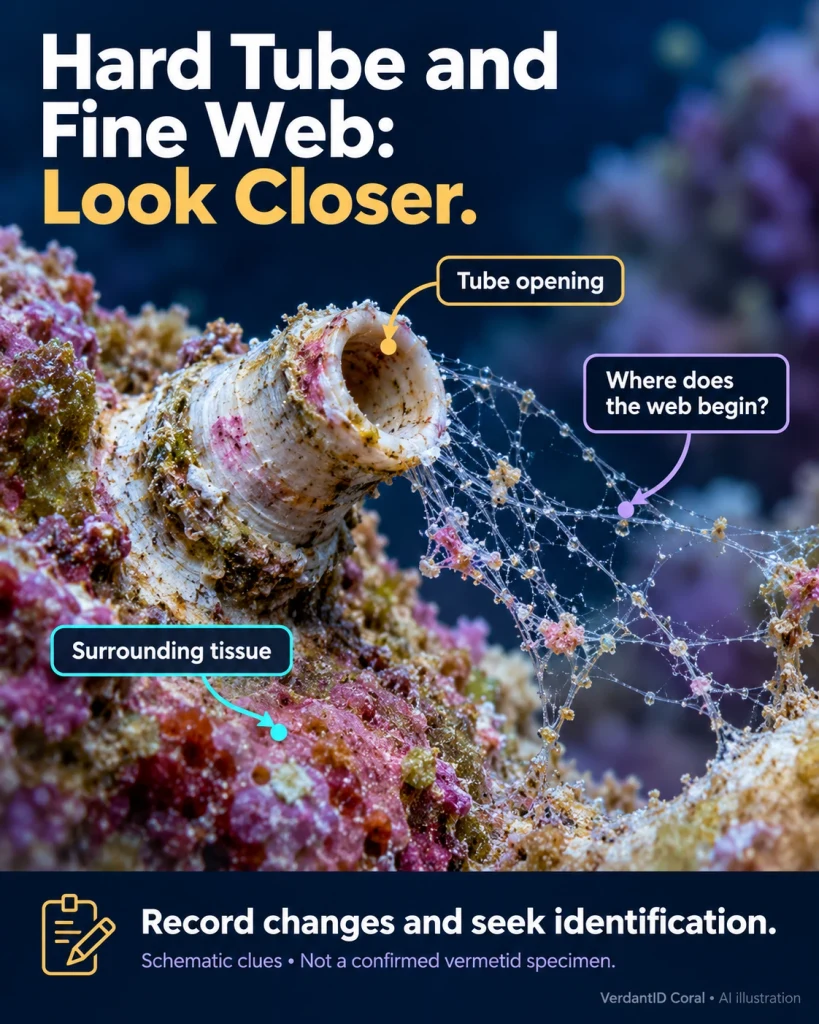
Hard Tubes and Mucus Webs: Investigating Vermetids

A fixed tube on a frag plug might look like a worm housing, while a fine mucus web can resemble ordinary debris. These are clues to investigate, not a reason to treat every tube as the same animal. ## Why vermetids attract attention Vermetids are marine snails with attached, ir…

  • Coral Care
  • Hitchhikers

0 responses · 0 reactions

guide

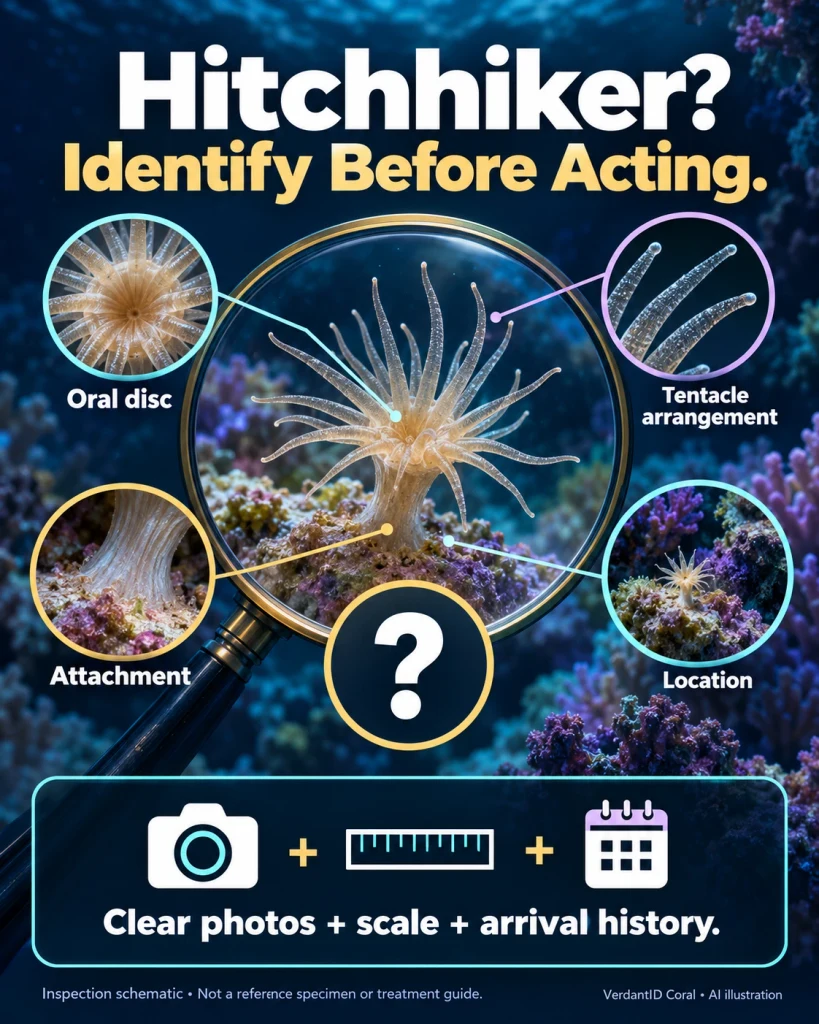
Possible Aiptasia? Identify the Hitchhiker Before Acting

A small anemone-shaped animal can arrive on a frag or rock. The useful first question is what it is, rather than which removal product to apply. ## Gather visible features Photograph the oral disc, tentacle arrangement, attachment area and the animal's position in the aquarium.…

  • Coral Care
  • Hitchhikers

0 responses · 0 reactions

guide

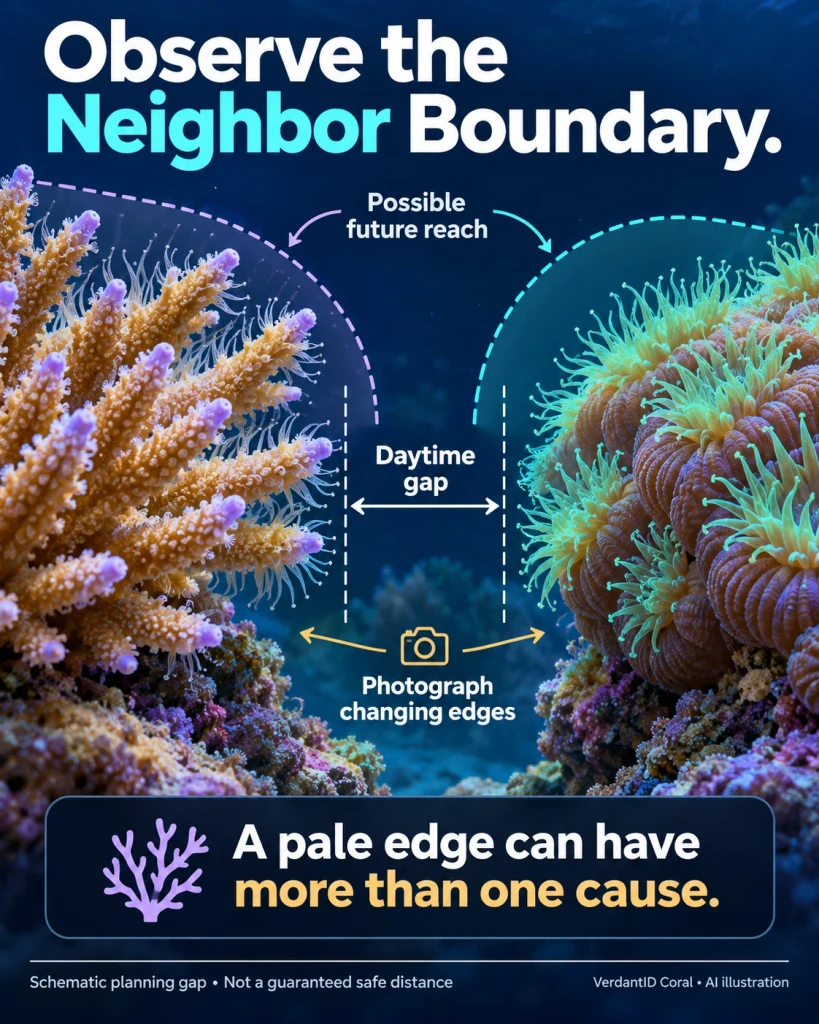
When Coral Neighbors Touch: Observe the Boundary

A reef aquarium is a growing community. Two colonies that fit beside each other today may eventually occupy the same space, and similar colors or trade names do not guarantee compatibility. ## Contact can change the picture Tentacles, living tissue and other interactions can af…

  • Flow
  • Lighting

0 responses · 0 reactions

guide

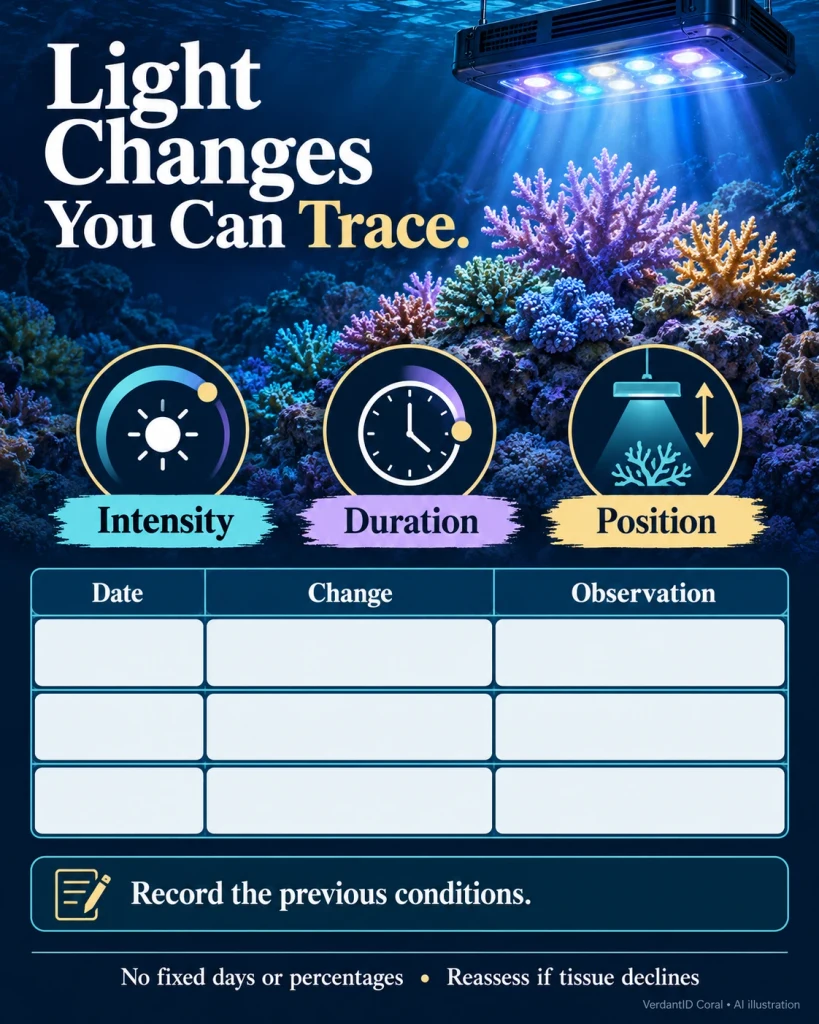
Light Acclimation: Make Changes You Can Trace

A new coral, a cleaned light cover or a changed fixture can alter exposure even when the aquarium looks familiar. An acclimation record makes the transition easier to understand. ## Start with the previous conditions Ask about earlier illumination and where the coral was positi…

  • Lighting

0 responses · 0 reactions