Possible Aiptasia? Identify the Hitchhiker Before Acting
A small anemone-shaped animal can arrive on a frag or rock. The useful first question is what it is, rather than which removal product to apply.
Gather visible features
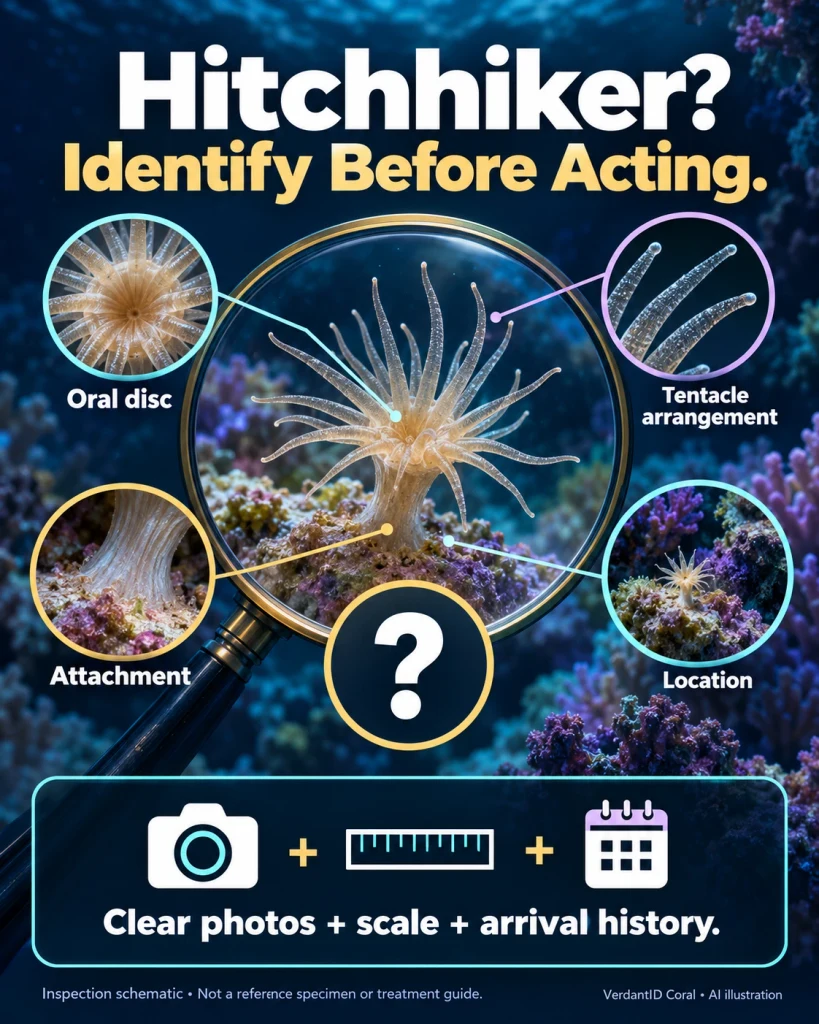
Photograph the oral disc, tentacle arrangement, attachment area and the animal's position in the aquarium. Include scale without touching it. A single brown silhouette in blue light is weak identification evidence, and several organisms can resemble one another in a poor image.
Use the history
Note when the rock or frag arrived, whether more individuals have appeared and how the animal behaves when current or lighting changes naturally. Do not provoke it or disturb nearby coral just to force a response.
Keep two decisions separate
- Ask for the best-supported identification and its uncertainty.
- Then consider whether management is needed in your system.
- If choosing a product, follow its directions for the confirmed target.
- Check possible effects on surrounding animals before intervention.
Avoid collateral damage
This post does not endorse a chemical, injection or predator introduction. Misidentifying a harmless hitchhiker can lead to unnecessary damage, while an unexplained change near coral still deserves observation. The accompanying diagram is an inspection prompt, not a reference specimen of Aiptasia.
Join the discussion
What hitchhiker surprised you?
Sources and further reading
Source: Original Verdant guide