Tiny Zoanthid Predators: What to Inspect Before You Treat
Your zoanthids stopped opening. Could a small hitchhiker be involved? Maybe—but light, flow, debris, recent disturbances and water changes can produce similar symptoms.
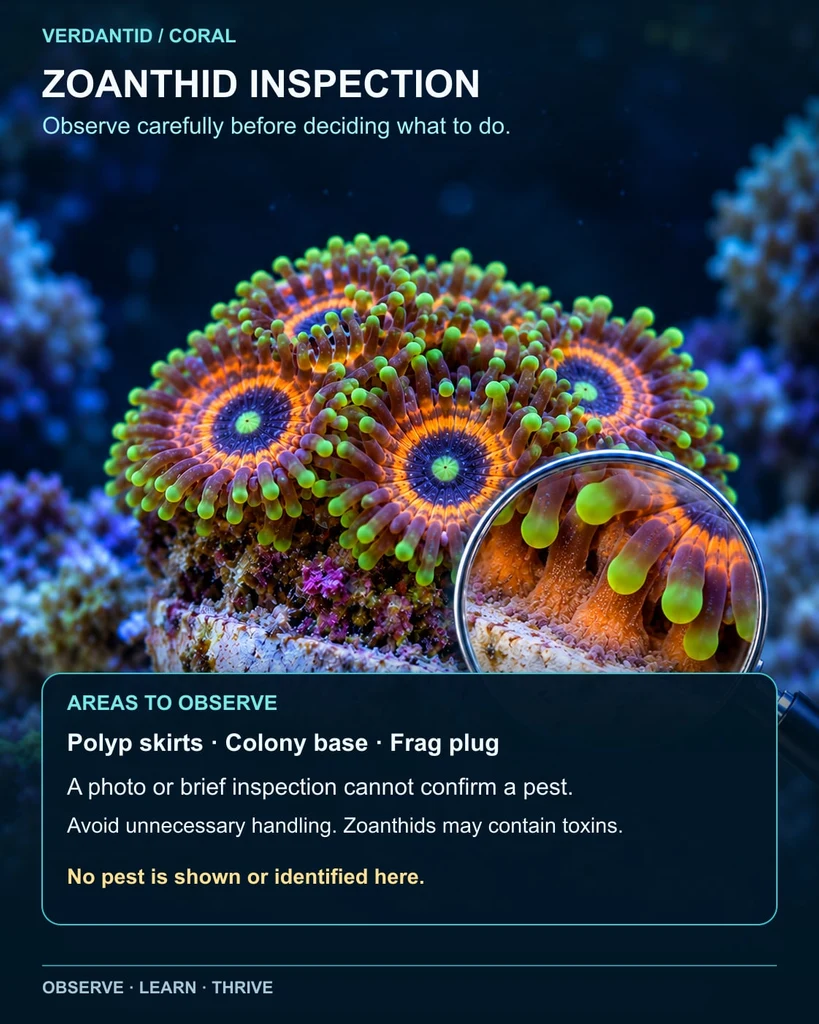
Check these places
- Around polyp skirts and the base of the colony.
- Under frag plugs or along the rock immediately next to the polyps.
- On adjacent corals, especially new additions.
- During different lighting periods, using a flashlight or magnifier without handling unnecessarily.
A brief inspection cannot establish that every hitchhiker is absent. Any treatment decision should follow a supported identification and the specific product directions; this guide does not prescribe a dip or treatment. Not every small organism is harmful, so try to identify it before taking action.
Take a useful identification photo
Show a sharp close-up of the suspected organism **and** a wider image of the entire colony. Add notes about how long polyps have been closed and whether any new frags arrived recently.
**Safety:** Zoanthids and related palythoas may contain potent toxins. Do not boil, heat, pressure-spray, cut or scrub colonies casually. Follow safe aquarium handling practices and seek immediate medical advice for possible toxin exposure.
**Discussion:** Have you ever found a hitchhiker so small you needed magnification?
Sources and further reading
Community education offers possible explanations and observation steps; it does not confirm a diagnosis.
Source: Original Verdant guide