Closed Zoanthids: Build a Better Inspection Record
A closed zoanthid colony cannot tell you whether the issue is light, flow, debris, a recent disturbance or a hitchhiker. Start with context instead of treating closure as proof of pests.
Use five observations
- When did the change begin, and was it sudden?
- Did the light schedule or the colony's position change?
- Is current carrying debris onto the polyps?
- Are surrounding animals behaving differently?
- Can you actually see an unfamiliar organism or damaged tissue?
Look without handling
A wider photograph can reveal placement and neighboring corals; a steady close-up can show the colony base and polyp edges. Do not lift or scrape a colony simply to get a photograph. If you find an organism, seek an identification before choosing a response.
Include the recent history
New frags, cleaning, dosing and pump adjustments all belong in the record. Add measured readings with their units and dates rather than saying that the water is fine. The separate predator-inspection guide covers where to look in more detail.
Remember handling risks
Some zoanthids and related animals can contain palytoxin. Avoid heating, aerosol-generating removal and unnecessary contact. Seek urgent medical advice if exposure is suspected.
Join the discussion
Have your zoas ever stayed closed for days?
Related Community reading
Sources and further reading
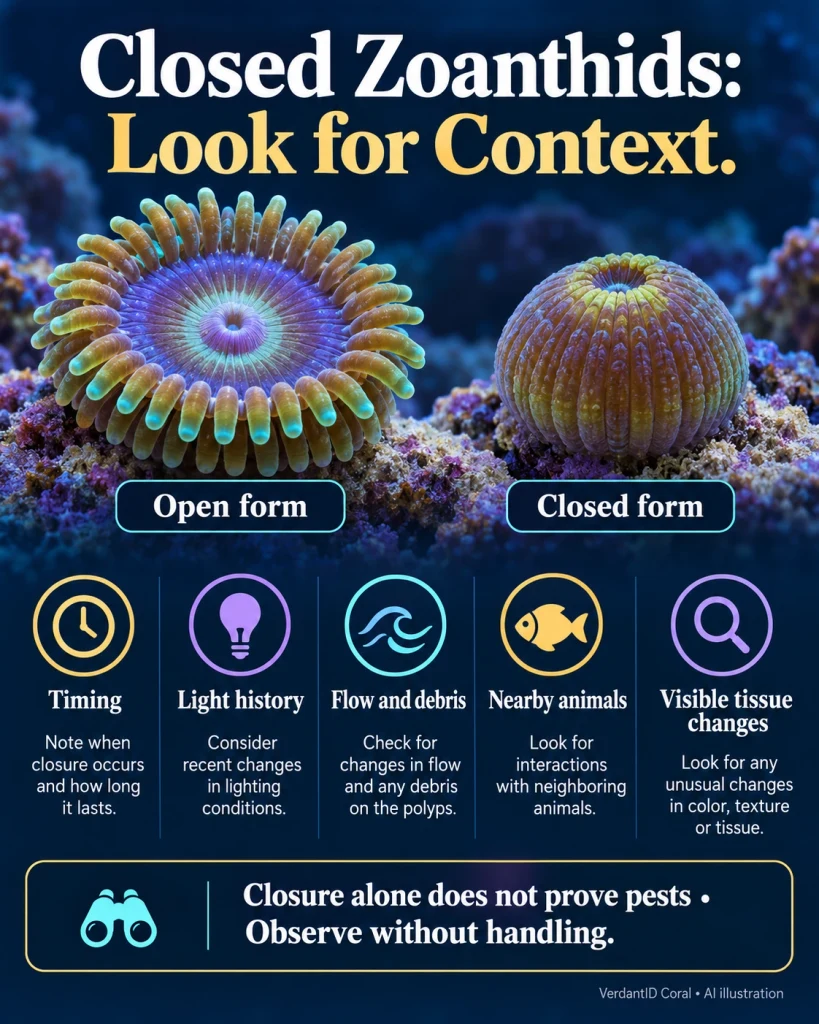
Source: Original Verdant guide