Bleaching or Tissue Loss? Signs to Distinguish
A coral turning pale can be alarming. But pale tissue and exposed skeleton aren't the same thing, and a photo may not tell the whole story.
Bleaching or paling
The animal may still have living tissue but lose much of its normal color. Changes in symbiotic algae or pigments, and light or environmental stress, can affect appearance. Bleaching does not automatically mean that the coral is dead.
Tissue recession or loss
When flesh is absent, the underlying skeleton may become visible. Receding tissue can progress and deserves careful observation and timely expert input. Bleaching and tissue loss can occur together, and visual signs alone may not identify their cause.
How to document it safely
- Take a close, sharp image under consistent light and an image showing the whole coral.
- Compare with older photographs; the speed of change is useful context.
- Record recent water tests, lighting adjustments, temperatures, additions and equipment incidents.
- Avoid scraping, touching or repeatedly moving already stressed tissue just to take a picture.
**Important:** Algae-covered skeleton, camera white balance and unusual natural pigmentation can be confusing. Don't label a suspected disease from a single image. If tissue loss is rapid, get informed help promptly.
**Discussion:** What's the hardest coral color or tissue change you've tried to identify?
Sources and further reading
Community education offers possible explanations and observation steps; it does not confirm a diagnosis.
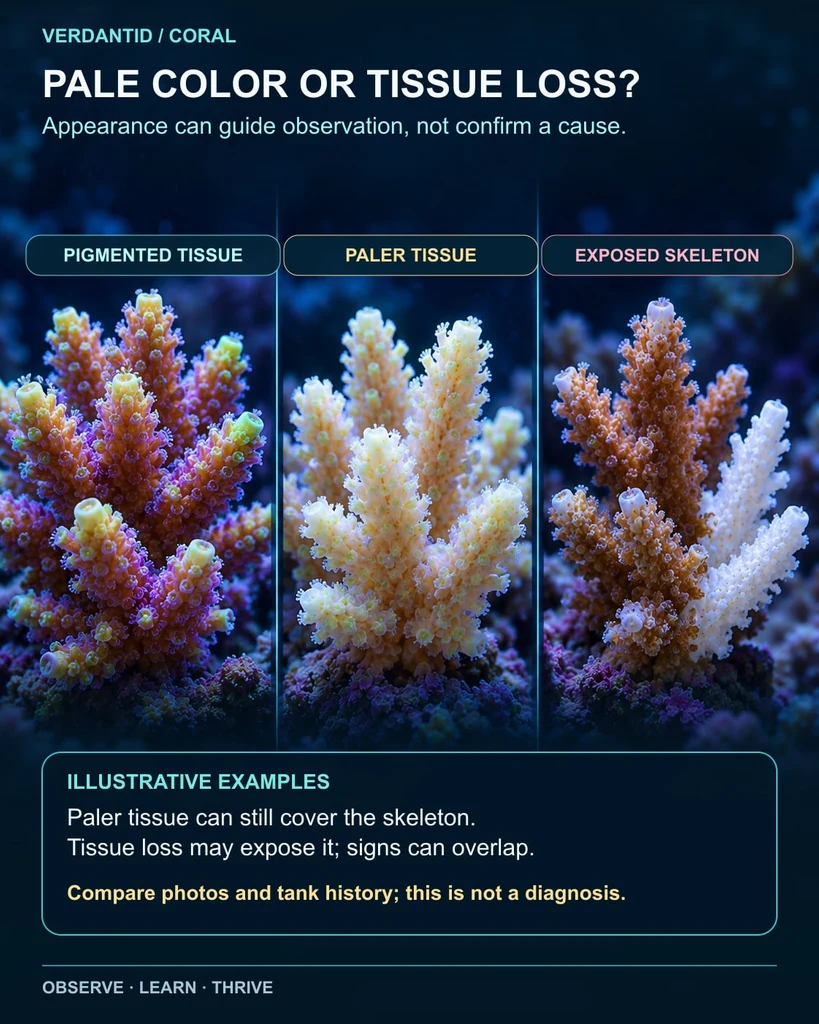
Source: Original Verdant guide