Torch Coral Won't Open? Start With These Five Checks
Your torch looked fluffy last week, but today the tentacles are tucked close to the skeleton. What changed? Retraction is a *sign to investigate*, not a diagnosis on its own.
1. Look at flow, not just the pump setting
Is the coral swaying irregularly, barely moving, or getting hit continuously from one direction? A newly aimed powerhead can change how a torch behaves.
2. Check the light history
Did you move the coral, clean light covers, change the schedule or raise intensity? Note the timing before changing anything again. Avoid rapid adjustments based on one photo.
3. Compare actual water readings
Record salinity, temperature, alkalinity and other parameters you normally monitor. Note the **time measured** and whether a large change coincided with retraction. Record both the values and how they have changed; interpret them in the context of the coral and tank.
4. Inspect nearby neighbors
Sweeper tentacles and contact from adjacent corals may cause stress. Check the area after lights-out too, without handling the coral unnecessarily.
5. Look for visible tissue changes
Retraction with tissue intact is different from damaged, peeling or missing tissue. If tissue is disappearing, document it and promptly seek experienced reefkeeping or aquatic-veterinary guidance.
**What to do next:** Photograph the coral from the same angle and lighting, note recent changes, and adjust only after gathering enough evidence. Avoid immediately dosing additives or moving the coral repeatedly.
**Discussion:** Has your torch ever stayed closed for a few days? What did you check before making a change?
Sources and further reading
Community education offers possible explanations and observation steps; it does not confirm a diagnosis.
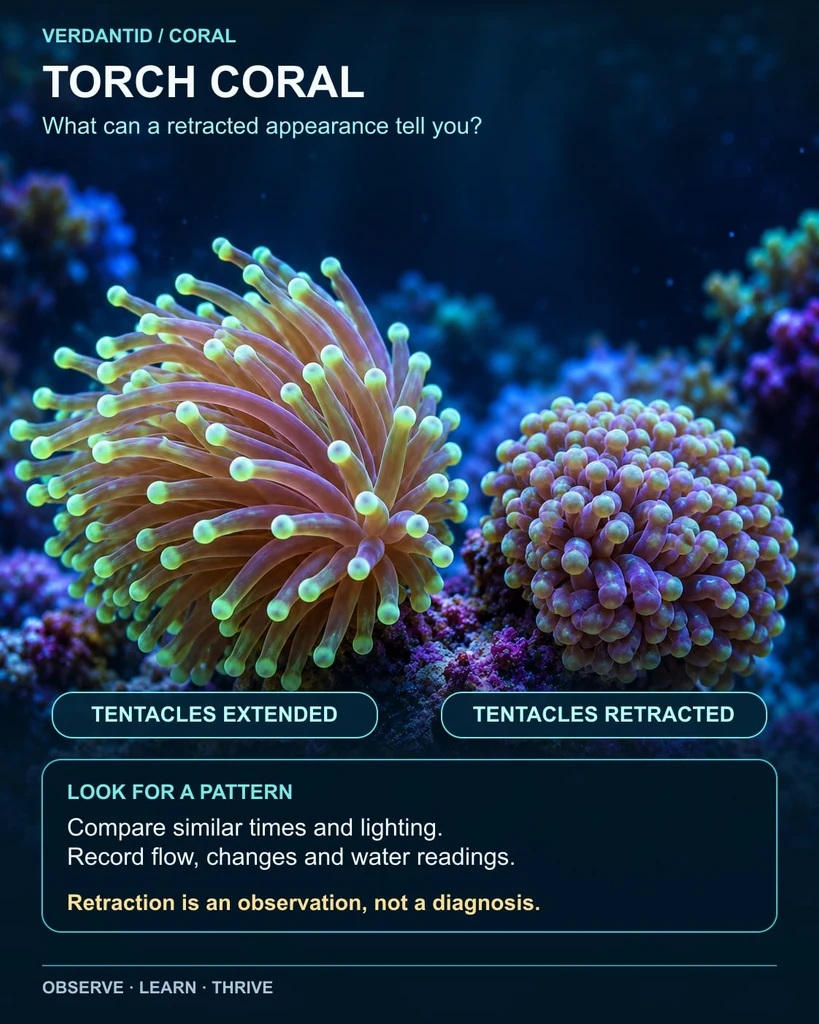
Source: Original Verdant guide