Light Acclimation: Make Changes You Can Trace
A new coral, a cleaned light cover or a changed fixture can alter exposure even when the aquarium looks familiar. An acclimation record makes the transition easier to understand.
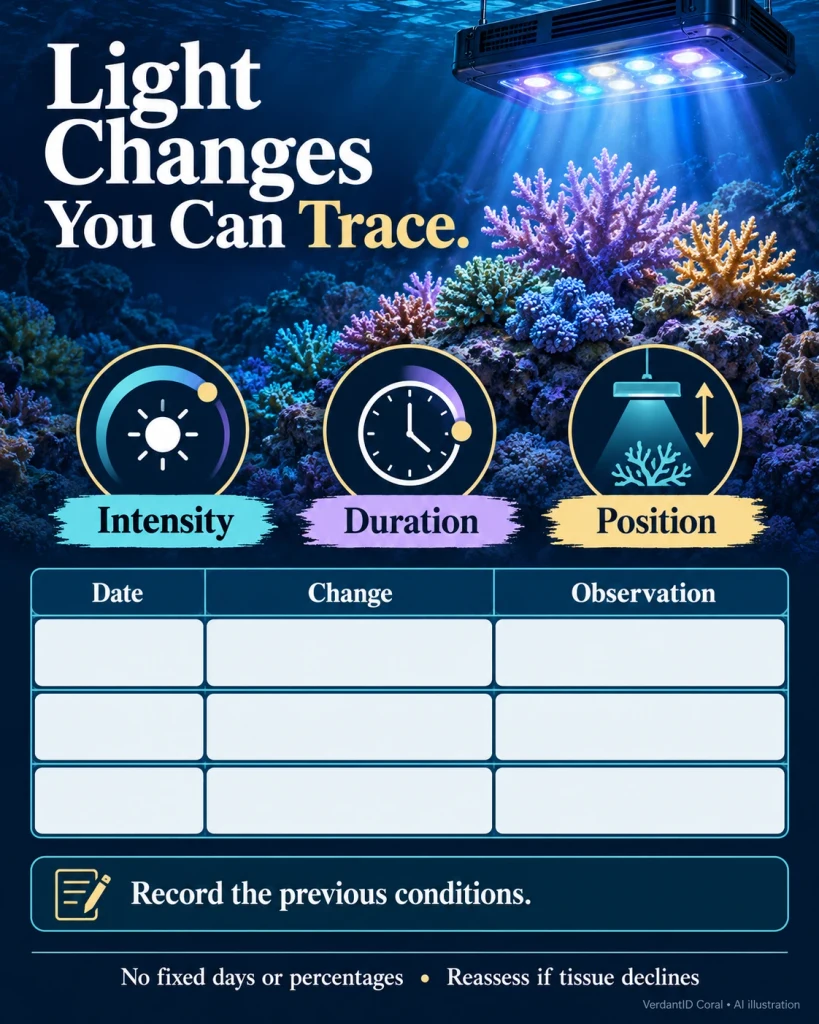
Start with the previous conditions
Ask about earlier illumination and where the coral was positioned. Note the new fixture, light schedule and location. A percentage on one model is not a transferable exposure setting for another model or aquarium.
Distinguish three changes
Intensity, duration and position affect exposure in different ways. Changing all three at once makes it difficult to interpret a response. An acclimation feature on a controller is a tool, not proof that a specific schedule suits every animal.
Keep the plan observable
- Use appropriate measured light information when available.
- Record the date and exact controller change.
- Repeat photographs under consistent settings.
- Watch tissue as well as apparent color and extension.
Avoid a universal ramp
There is no fixed sequence of days and percentages in this post. A suitable transition depends on the animal, the starting conditions and the equipment. If deterioration occurs, reassess the whole context and seek informed help instead of repeatedly raising or lowering the light to chase a photo.
Join the discussion
How slowly do you change your lights?
Sources and further reading
Source: Original Verdant guide