Zoanthid Safety: Prevent Heat and Aerosol Exposure
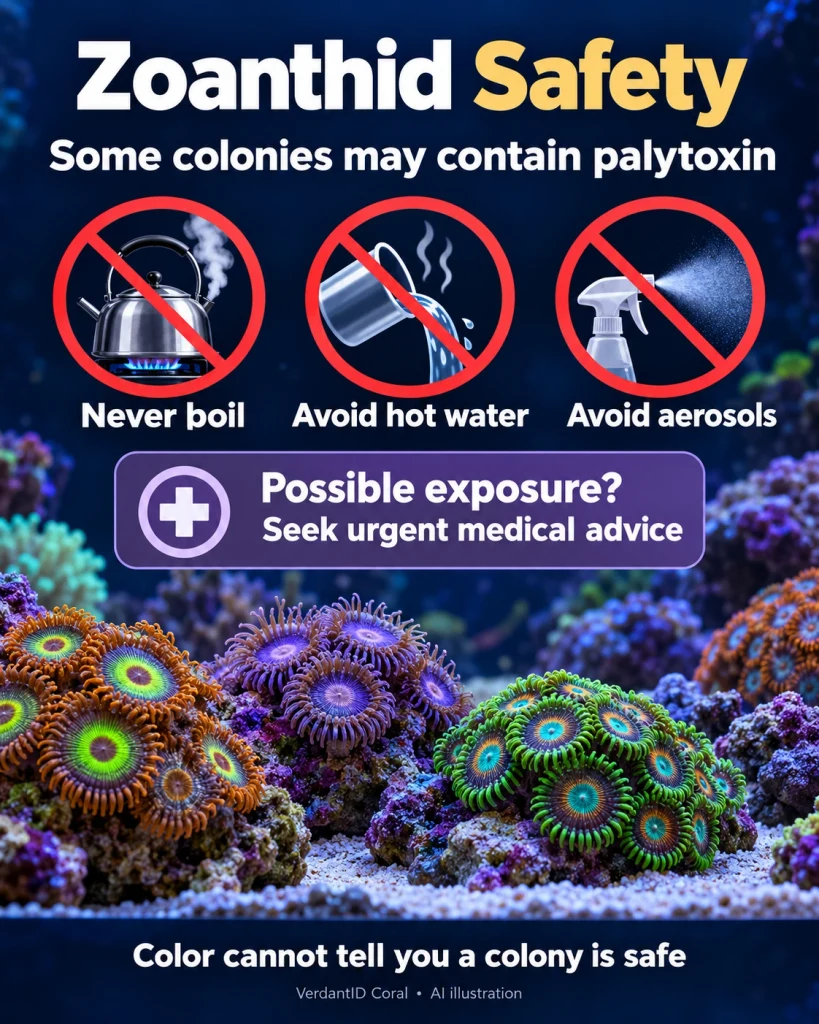
Some zoanthids and related palythoas can contain palytoxin. Appearance and a reassuring trade name cannot tell you that a colony is safe to handle or remove aggressively.
Avoid the hazardous shortcuts
Do not boil rocks or colonies, apply hot water, pressure-spray them, or use vigorous removal methods that may create contaminated droplets. The CDC has documented suspected inhalation exposures associated with zoanthid-containing aquariums, including people who were nearby rather than directly handling the coral.
Plan before handling
Keep children and pets away from maintenance, avoid touching eyes or broken skin, and seek expert guidance for work involving a potentially toxic colony. Do not assume that ordinary gloves, eyewear or an unspecified mask make aerosol-generating work safe. This post does not define a protective-equipment or decontamination protocol.
If exposure may have occurred
Stop the activity and seek urgent medical or poison-service advice, especially with breathing difficulty, eye exposure or systemic symptoms. Tell the clinician that marine aquarium material and possible palytoxin were involved. Do not rely on a Community diagnosis or a home treatment.
Share useful safety information
Discuss the maintenance task and precautions without identifying a toxin concentration from color or asking another keeper to repeat the exposure. The illustration is a reminder of avoided activities, not a safe-handling demonstration.
Join the discussion
What's one safety habit you never skip?
Sources and further reading
Source: Original Verdant guide