Power-Outage Readiness: Plan Before the Lights Go Out
An outage plan is easier to use when the equipment has already been tested. Decide how to support essential circulation, gas exchange and temperature for your system before an emergency.
Inventory the essentials
List equipment, actual power draw, battery or backup compatibility and the animals' needs. Backup runtime depends on the device, battery condition and load; a generic hours-of-protection claim is not a reliable plan. Follow the manufacturer's installation and charging instructions.
Run a safe rehearsal
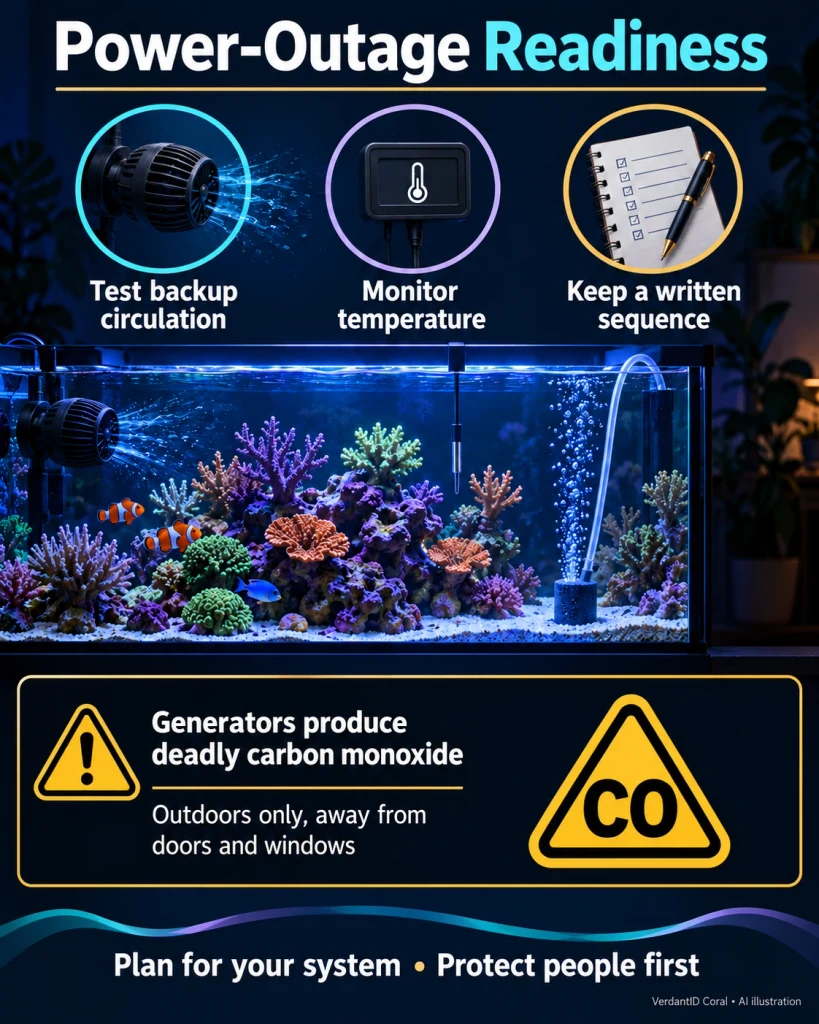
Where safe and practical, confirm that the intended backup starts and the necessary equipment operates. Keep a written sequence and supplies accessible. Do not create an electrical hazard, bypass protective equipment or work on wet energized connections.
Monitor the actual conditions
Observe animals and measure temperature rather than assuming that the loss of lighting is the only change. Seek system-specific help during a prolonged outage. Avoid sudden improvised temperature corrections or unfamiliar chemical treatments.
Protect people first
Fuel-powered generators can cause fatal carbon-monoxide poisoning. Follow CDC and manufacturer guidance: operate outdoors away from building openings, never inside a home or garage. Aquarium survival does not justify unsafe generator use.
After power returns
Check equipment operation, alarms and the animals. Record the outage duration and observations before deciding what follow-up is needed.
Join the discussion
Do you have an emergency aeration plan?
Sources and further reading
Source: Original Verdant guide