Your Reef After Lights-Out: Observe Before You Change
The daytime view is only part of a coral's daily pattern. A short, quiet look after lights-out can reveal a different arrangement of tentacles and neighboring animals.
Expect differences, not one universal pattern
Some corals extend feeding tentacles more prominently at night; others remain active during the day or change little. Species, feeding opportunities and aquarium conditions affect what you see. A single closed polyp after dark does not by itself establish a problem.
Watch the space between colonies
Tentacles or other contact may reach beyond the area occupied in daylight. Observe without putting hands between corals or repeatedly shining an intense light at them. Do not assume a peaceful daytime gap means contact can never occur.
Build a useful observation
- Note the time relative to the light schedule.
- Photograph the same colony from the same position.
- Record feeding and any equipment change.
- Compare the pattern across more than one evening.
When the pattern deserves attention
A new change accompanied by damaged or disappearing tissue needs more attention than an established day/night rhythm. Record the evidence and seek informed help promptly if tissue loss progresses.
Join the discussion
Which coral looks different after lights out?
Sources and further reading
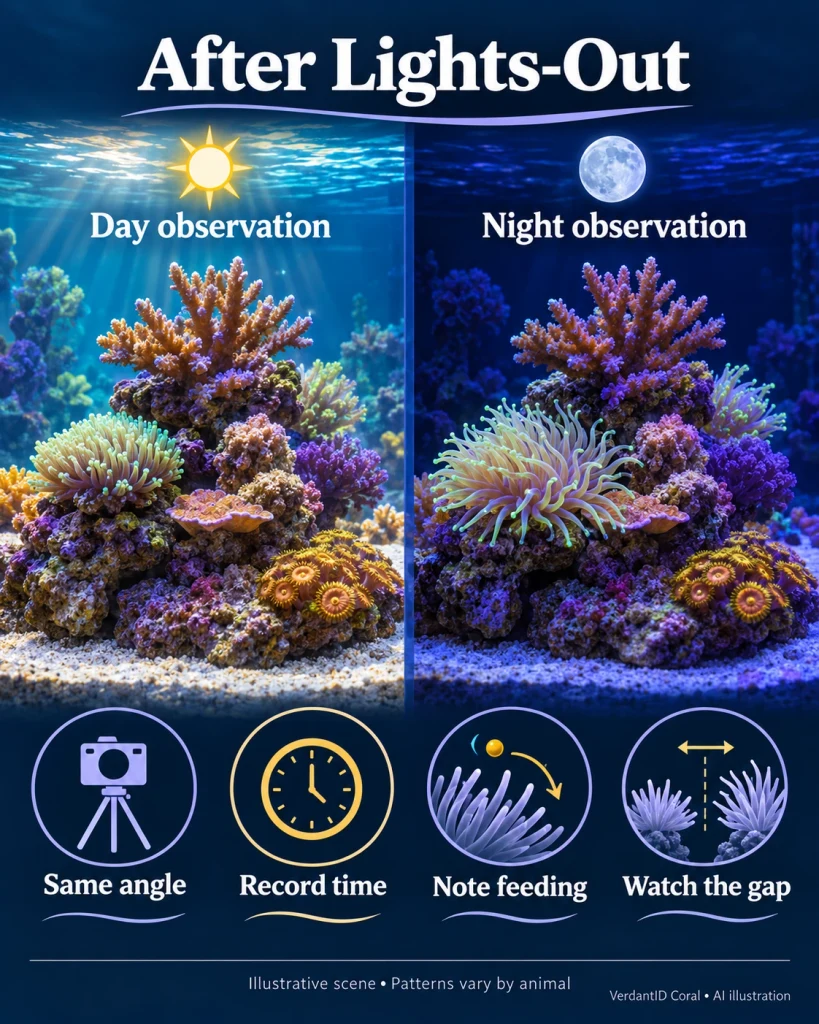
Source: Original Verdant guide