Calcium, Alkalinity and Magnesium: Read Them Together
These three tests describe related parts of seawater chemistry, but they are not three versions of the same number. Understanding the relationship helps prevent unnecessary additives.
Calcium and alkalinity
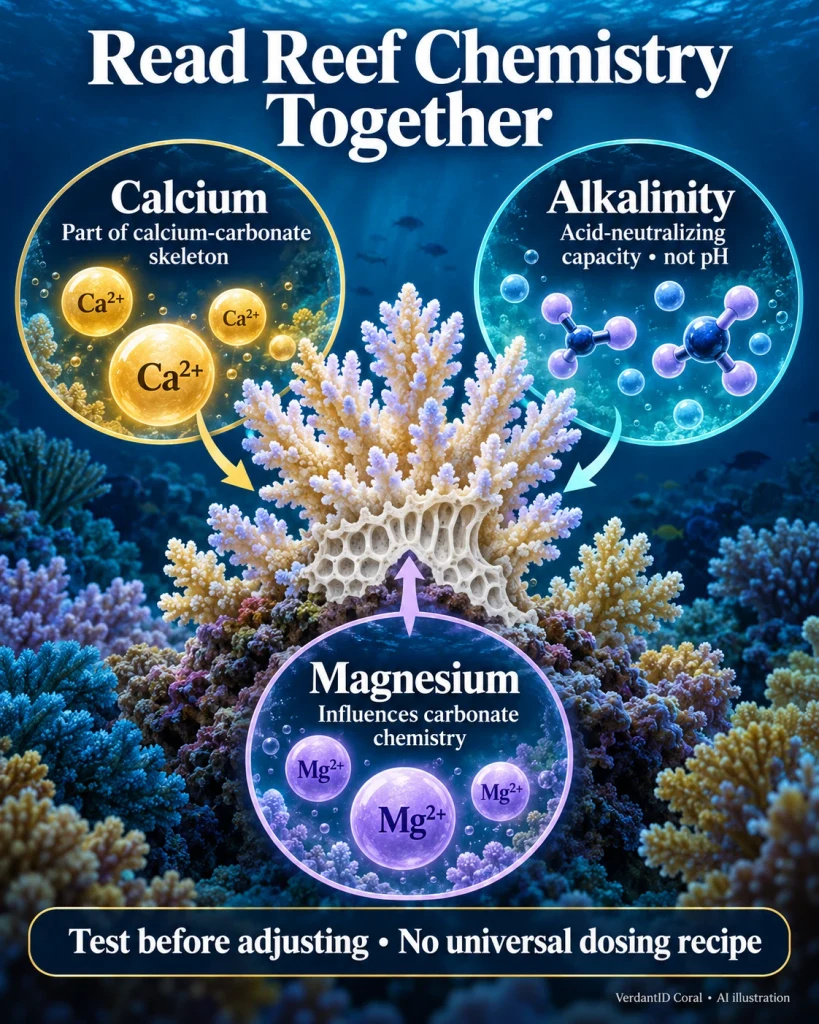
Stony corals use calcium and carbonate chemistry when building skeleton. Aquarium alkalinity describes acid-neutralizing capacity and is commonly reported in dKH or meq/L. It is not a direct measurement of pH. A supplement can affect more than one part of the system.
Where magnesium fits
Magnesium affects seawater carbonate chemistry, including calcium-carbonate precipitation. That does not mean every unusual alkalinity value is a magnesium problem. Test the parameter you propose to change and check the source water or salt mix too.
Before choosing a product
- Confirm salinity and the units on all three results.
- Check the actual dose and aquarium water volume.
- Read which ingredients and parameters the product changes.
- Avoid combining corrective products without understanding their interaction.
Build a system-specific plan
A successful dosing method should match measured demand, not just the number of coral frags. This introduction deliberately avoids a recipe: concentrations, volumes and product strengths differ, and an unexpected result may be a measurement or equipment issue.
Join the discussion
Which parameter is most confusing?
Sources and further reading
Source: Original Verdant guide