Alkalinity: Make Each Reading Comparable
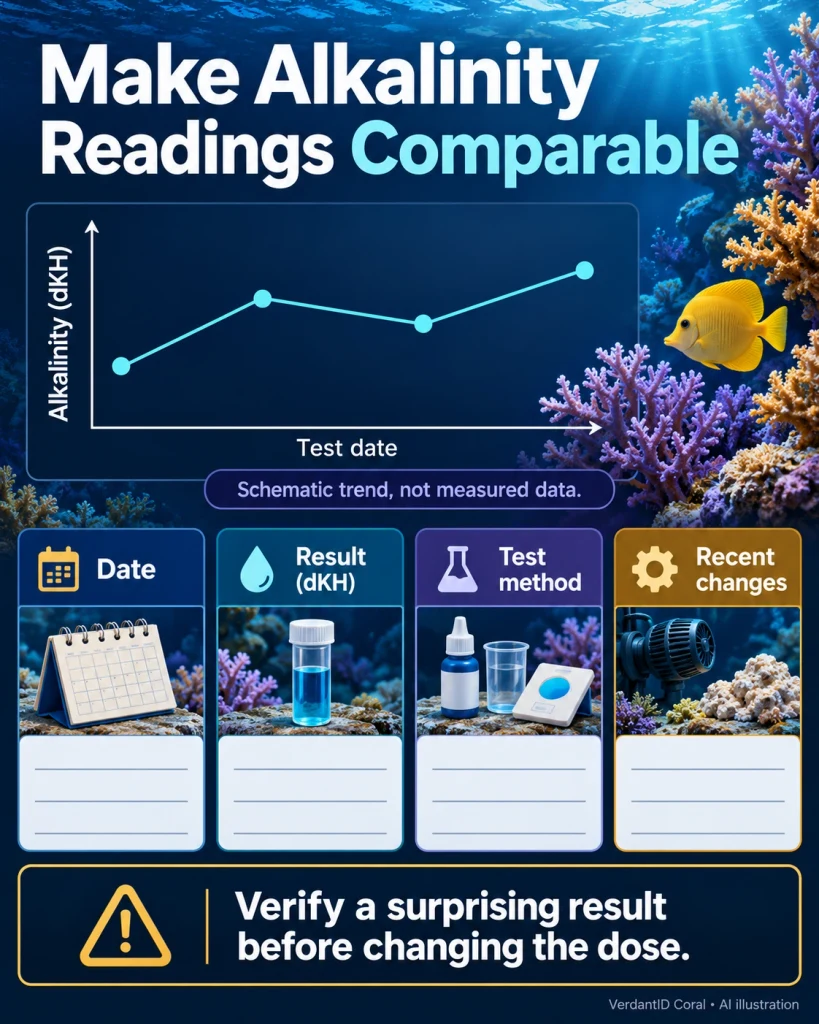
An alkalinity result is more useful when you know how it was measured and what happened around it. A row of numbers from inconsistent tests can look like instability even when the comparison is flawed.
Build a consistent record
Record the test date, result, units and kit or instrument. Check the product instructions for sample volume, reagent storage and endpoint interpretation. If a result is surprising, investigate the measurement before making a large corrective dose.
Read values and trends together
Stability is useful context, but a stable unsuitable value is not automatically a good result. Interpret the measured level alongside the animal, salt mix, dosing system and other chemistry. Avoid borrowing a target simply because a different aquarium uses it.
When consumption seems to change
- Check recent coral additions and changes in growth.
- Inspect the dosing schedule and actual equipment operation.
- Compare with calcium and salinity records.
- Confirm an unexpected result using an appropriate repeat check.
Keep the response measured
Use a documented approach suited to the system and product. This guide does not give a universal dose or correction speed; those require reliable volume, product strength and chemistry information.
Join the discussion
Do you log your alkalinity trends?
Sources and further reading
Source: Original Verdant guide